Table of Contents
- Smarketers – B2B Account-Based Marketing Specialists
- Social Beat – Performance Marketing & Commerce
- WATConsult – Social Media & Creative Campaigns
- Dentsu Webchutney – Creative Campaigns
- iProspect India – Enterprise Digital Performance
- Techmagnate – SEO & Digital Consulting
- FoxyMoron – Content & Media Integration
- Amura Marketing Technologies – Growth Marketing
- Merkle Sokrati – Performance Technology
- Oxper Martech – Martech Consulting
- How to Choose Your MarTech Partner
- Frequently Asked Questions
Need help with B2B Marketing?
Let the smarketers’ team drive your pipeline with data-led campaigns and AI-powered growth strategies.
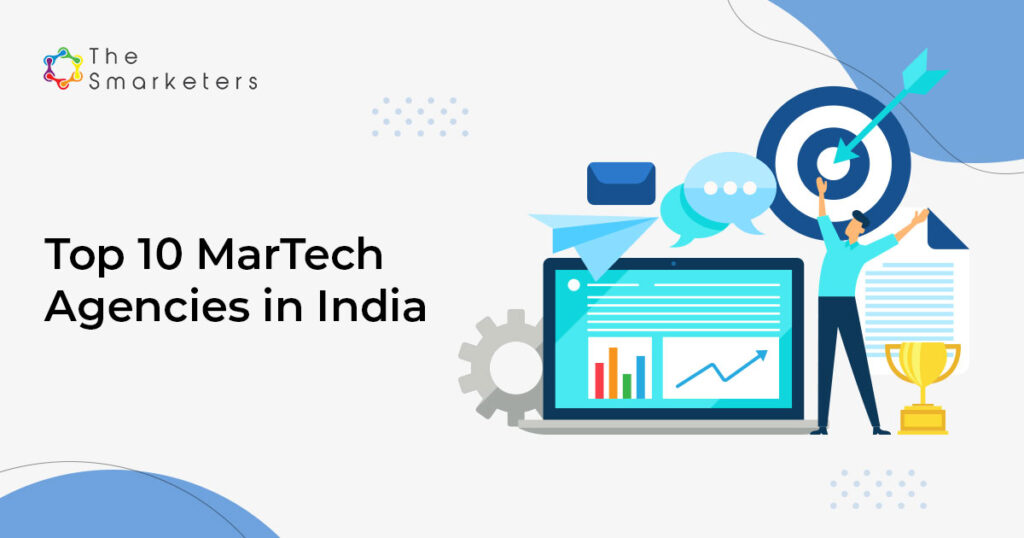
The MarTech industry in India is expanding rapidly, with projections indicating a digital marketing spend of ₹50,000 crore by 2025. As more businesses integrate marketing strategies with technology, choosing the right MarTech agency has become essential for success.
In this guide, we explore the top 10 MarTech agencies in India that cater to the diverse needs of companies, focusing on their specialties, strengths, and key services.
Smarketers – B2B Account-Based Marketing Specialists
- Location: Hyderabad
- Founded: 2015
- Website: Smarketers
Smarketers is a leading B2B agency specializing in Account-Based Marketing (ABM) and HubSpot implementation. Their approach bridges the gap between sales and marketing teams, which is a common challenge in B2B organizations.
Services: Account-Based Marketing, HubSpot implementation, B2B content strategy, sales-marketing alignment, virtual events, website development for B2B
Recognition
- ITSMA Gold Award for Marketing Excellence in ABM (2019) – awarded by the organization that
- coined the term Account-Based Marketing.
- HubSpot Platinum Partner – top tier partnership status. [Source]
- Clutch leading B2B agency ranking. [Source]
Client Results
Client feedback from Clutch: “What I value most about The Smarketers team is they are very knowledgeable about B2B and Account-Based Marketing. I also find them to be very collaborative and responsive.“ [Source]
Another client noted: “We were able to substantially increase the lead gen numbers due to the structured approach and process, better alignment between sales and marketing, and well-defined SLAs.“ [Source]
Best For
B2B technology companies and SaaS businesses that need Account-Based Marketing, sales-marketing alignment, and HubSpot implementation. The ITSMA recognition indicates deep ABM expertise that few agencies in India possess.
Social Beat – Performance Marketing & Commerce
- Location: Chennai, Bangalore, Mumbai, Delhi
- Founded: 2012
- Website: Social Beat
Social Beat excels in performance marketing, influencer marketing, and Salesforce Marketing Cloud implementation. Their team of 300+ professionals makes them a great choice for D2C brands and e-commerce companies with substantial marketing budgets.
- Services: Performance marketing, Salesforce implementation, influencer marketing, e-commerce marketing.
- Best For: D2C brands and e-commerce companies with significant ad spends.
WATConsult – Social Media & Creative Campaigns
- Location: Mumbai, Delhi, Bangalore
- Founded: 2007
- Website: WATConsult
WATConsult specializes in social media marketing and creative campaigns. As part of Dentsu International, they have the global resources to deliver impactful campaigns for large consumer brands, making them ideal for brands focusing on creativity and engagement.
- Services: Social media marketing, SEO, video production, media planning.
- Best For: Large consumer brands seeking creative, social media-driven campaigns.
Dentsu Webchutney – Creative Campaigns
- Location: Bengaluru, Mumbai, Gurgaon
- Founded: 1999
- Website: Webchutney
Dentsu Webchutney is renowned for its creative excellence and has won multiple awards for its work. Their focus on digital influence and experiential marketing makes them ideal for consumer brands that need compelling and unique campaigns.
- Services: Creative campaigns, social media, content production.
- Best For: Consumer brands looking to build a creative, memorable brand.
iProspect India – Enterprise Digital Performance
- Location: Mumbai, Bangalore, Delhi, Chennai
- Website: iProspect
Part of Dentsu International, iProspect specializes in performance media and data-driven integrated marketing. Their proprietary tools and global network make them perfect for large enterprises looking for measurable outcomes across digital channels.
- Services: Digital media planning, programmatic advertising, search marketing.
- Best For: Large enterprises seeking integrated media planning and performance marketing.
Techmagnate – SEO & Digital Consulting
- Location: New Delhi
- Founded: 2006
- Website: Techmagnate
Techmagnate is a leading SEO and digital marketing consulting firm that specializes in long-term growth strategies for enterprises across various industries, including BFSI, e-commerce, and healthcare.
- Services: SEO, SEM, digital consulting, campaign management.
- Best For: Organizations looking for expert SEO and long-term digital strategy.
FoxyMoron – Content & Media Integration
- Location: Mumbai, Gurgaon, Bangalore
- Founded: 2008
- Website: FoxyMoron
FoxyMoron blends content marketing with media buying to provide full-funnel marketing solutions. Their expertise in influencer marketing and creative production has made them the go-to agency for major brands like L’Oréal and Netflix.
- Services: Content marketing, influencer marketing, creative production.
- Best For: Brands seeking content-led marketing with media integration.
Amura Marketing Technologies – Growth Marketing
- Location: Pune, Mumbai, Bangalore
- Founded: 2009
- Website: Amura Marketing
Amura is known for combining AI-powered analytics with growth marketing strategies. Their data-driven approach helps brands scale effectively by optimizing their marketing channels and processes.
- Services: Growth marketing, CRM implementation, digital strategy.
- Best For: Companies seeking data-driven growth strategies with technical implementation.
Merkle Sokrati – Performance Technology
- Website: Merkle Sokrati
Merkle Sokrati uses proprietary technology and algorithms to optimize paid media campaigns. Their focus on performance marketing automation and bid management makes them an excellent choice for performance-focused businesses.
- Services: Performance marketing automation, bid management, analytics.
- Best For: Businesses looking for performance marketing and campaign optimization.
Oxper Martech – Martech Consulting
- Location: Bengaluru
- Website: Oxper Martech
Oxper Martech focuses on providing consulting services for businesses looking to implement MarTech tools and optimize their marketing efforts. They help businesses design and execute automated workflows for better performance.
- Services: MarTech consulting, workflow automation, campaign management.
Best For: Businesses looking for MarTech consulting and workflow automation.
How to Choose Your MarTech Partner
Start with your business model as it determines what you actually need from a MarTech agency. If you are a B2B SaaS and Technology company, your challenges are fundamentally different from consumer brands. You may be dealing with:
- 3-12 month sales cycles (sometimes longer)
- Multiple decision-makers (5-7 people on average in B2B purchases)
- High deal values that require relationship building
- Sales and marketing teams that need to work as one unit
- Pipeline visibility and attribution that matters more than awareness metrics
This means you need more than digital marketing such as Account-Based Marketing. You need sales-marketing alignment systems. You need agencies that understand buying committees.
Smarketers holds the ITSMA Gold Award (ITSMA is the organization that literally created Account-Based Marketing). This recognition means they’ve been evaluated by the people who wrote the playbook on ABM. Their HubSpot Platinum status adds another layer: they can implement the technology infrastructure B2B companies need.
Always ask agencies who claim themselves as B2B marketing agencies to show ITSMA certifications, case studies with 6+ month sales cycles, and how they align sales and marketing KPIs. If they can’t answer these specifically, they’re generalists trying to apply consumer tactics to B2B situations.
D2C and E-commerce Brands:
If you are a D2C brand, your needs are completely different and may have:
- Short purchase cycles (minutes to days)
- Single decision-maker (the consumer)
- High volume, lower transaction values
- Performance metrics that focus on ROAS, CAC, and conversion rates
- Heavy reliance on paid media and influencer marketing
Social Beat manages 3% of India’s digital advertising spend and has done 150+ Salesforce implementations. That scale matters when you need to deploy capital efficiently across multiple channels. Their Influencer.in platform is purpose-built for this model.
FoxyMoron works with Netflix, Amazon, L’Oréal—brands that need content volume and media integration. They’re built for consumer marketing.
Large Enterprises:
These enterprises have different challenges:
- Complex stakeholder management
- Brand consistency across regions
- Procurement processes that require global agency partnerships
- Multiple brand portfolios that need coordination
iProspect India and WATConsult are part of Dentsu International. This gives you:
- Global network resources
- Established vendor relationships
- Enterprise-scale team structures
However, understand the tradeoff: In large agency networks, you’re one account among many. The Glassdoor reviews for these agencies specifically mention resource allocation challenges and workload issues. This doesn’t mean they’re bad but it means you need to negotiate account team structure upfront and get commitments in writing about dedicated resources.
The Five Evaluation Criteria That Actually Matter
1. Proven expertise in your specific business model
Don’t accept “we work with all kinds of companies” as an answer. Ask:
- What percentage of your revenue comes from companies like mine?
- Show me three case studies with businesses that have our sales cycle length
- What certifications do you hold that are specific to our model?
For B2B: ITSMA, HubSpot, Salesforce B2B certifications matter. For D2C: Google Premier Partner, Meta Business Partner, commerce platform certifications matter.
2. Verified client results in your industry
Testimonials are marketing. Look for:
- Clutch/G2 reviews with specific metrics
- Case studies with actual numbers (pipeline generated, conversion rates, ROI)
- References you can actually call
Notice the difference:
- Smarketers shows: “substantially increase the lead gen numbers due to structured approach and well-defined SLAs” (verified on Clutch)
- Generic claim: “We helped our client grow their business significantly”
One gives you something measurable. The other is just words.
3. Team structure and resource allocation
This is where many agencies fall apart in execution. Ask:
- Who exactly will work on my account? (Names, not roles)
- What’s their current workload?
- How many other accounts will they manage simultaneously?
- What happens if someone leaves?
The honest answer matters more than the polished answer. If an agency says “we’ll assign our best people,” that’s a red flag. If they say “here’s your account team, they currently manage 3 other accounts, and here’s our backup structure,” that’s transparency.
4. Cultural fit and communication style
B2B sales cycles mean you’ll work with this agency for months or years. Some questions:
- Do they communicate in your style? (Some companies want daily Slack updates, others want weekly calls)
- Do they challenge your assumptions or just execute what you ask?
- How do they handle disagreements?
5. Transparency about what they don’t do well
No agency is perfect at everything. Agencies that claim they excel at B2B and D2C and creative and performance marketing are lying or mediocre at all of them.
Better questions:
- What types of clients do you turn down?
- What’s the last project you underperformed on, and why?
- What services do you partner with others to deliver?
Specialists will tell you what they don’t do. Generalists will promise everything.
Checklist: Making Your Decision
Here’s a practical approach:
Step 1: Identify which business model you are (B2B, D2C, Enterprise consumer brand)
Step 2: Shortlist agencies that have specific expertise in that model
- For B2B: Look for ITSMA, ABM certifications, HubSpot partnerships
- For D2C: Look for commerce platform partnerships, influencer capabilities
Step 3: Request case studies with companies similar to yours
- Same industry
- Same sales cycle length
- Same approximate size
- Verified results, not just testimonials
Step 4: Evaluate team structure
- Meet the actual people who’ll work on your account
- Understand their current workload
- Get clarity on communication protocols
Step 5: Check verified reviews
- Clutch, G2, Glassdoor
- Look for patterns in feedback (both positive and negative)
- Ask the agency about their most common client complaints
Step 6: Test cultural fit
- Do they ask good questions or just pitch solutions?
- Do they challenge your assumptions or agree with everything?
- How do they explain what they don’t do well?
Frequently Asked Questions
1. What does a typical MarTech stack look like for a B2B SaaS company in India in 2026?
A typical B2B SaaS MarTech stack in India includes:
- CRM: HubSpot or Salesforce for managing the entire customer lifecycle
- Marketing Automation: HubSpot Marketing Hub or Marketo for email campaigns, lead scoring, and nurturing
- ABM Platform: 6sense, Demandbase, or HubSpot’s ABM tools for Account-Based Marketing
- Analytics: Google Analytics 4, Mixpanel, or Amplitude for product analytics
- Attribution: Bizible (Adobe), HubSpot Attribution, or custom dashboards in Looker Studio
- Content: SEMrush or Ahrefs for SEO; Canva or Adobe Creative Cloud for design
- Event/Webinar: Zoom, Hopin, or ON24 for virtual events
- Data Warehouse: BigQuery or Snowflake for centralizing data from multiple sources
Beyond basic tools, B2B SaaS companies are adding intent data platforms (Bombora, 6sense), conversation intelligence tools (Gong, Chorus), and advanced attribution to understand the long sales cycle. The key is integration and ensuring your CRM, marketing automation, and analytics are in sync.
2. For Indian startups, which MarTech tools actually deliver ROI and which are just ‘nice to have’?
Must-have tools that deliver ROI:
- CRM (HubSpot, Salesforce, LeadSquared): Essential for managing leads and sales pipeline. Without this, you can’t track what’s working.
- Email marketing (HubSpot, Mailchimp): High ROI channel. Email still converts better than most other channels for B2B.
- Analytics (Google Analytics 4, Mixpanel): You can’t improve what you don’t measure. GA4 is free and powerful.
- SEO tools (SEMrush, Ahrefs): Organic traffic is free traffic. These pay for themselves if you use them.
Nice-to-have (only after product-market fit):
- ABM platforms (6sense, Demandbase): Expensive. Only makes sense when you’re targeting large accounts with 6-figure deals.
- Advanced attribution tools: Useful once you have multiple marketing channels and complex customer journeys.
- Customer data platforms (CDPs): Only needed when you have multiple data sources and need unified customer profiles.
- Conversation intelligence (Gong, Chorus): Helpful for sales coaching but expensive for early-stage startups.
For Indian startups specifically, start with HubSpot’s free CRM, Google Analytics, and basic email marketing. Add paid tools only when you can directly tie them to revenue increase. Many startups waste money on tools they don’t fully utilize.
3. How are marketers in India combining CRM, marketing automation, and analytics to build a lean but effective MarTech stack
The most effective approach is the “hub and spoke” model where your CRM is the hub and everything else connects to it:
- CRM as the hub: HubSpot or Salesforce stores all customer data, interactions, and deal stages
- Marketing automation connects to CRM: Email campaigns, lead scoring, and nurturing workflows sync directly with CRM records
- Analytics feeds into CRM: Use native integrations or Zapier to push website behavior, form submissions, and conversion data into CRM
- Reporting layer: Build dashboards in Looker Studio that pull data from CRM, Google Analytics, and ad platforms
This gives you full-funnel visibility without tool bloat. The key is ensuring every tool serves a specific purpose and integrates with your CRM. If a tool doesn’t feed data into your CRM or reporting dashboard, reconsider whether you need it.
4. What MarTech software would you prioritize for a SaaS startup with a limited budget?
For a SaaS startup with limited budget (assuming <$500/month for MarTech), prioritize in this order:
- HubSpot CRM (Free) + HubSpot Marketing Hub Starter ($20/month)
Gives you CRM, email marketing, forms, landing pages, basic automation, and deal pipeline. This alone covers 80% of what you need to start generating and managing leads.
- Google Analytics 4 (Free)
Essential for understanding website traffic, user behavior, and conversion paths. No excuse not to have this set up properly.
- SEMrush or Ahrefs (~$100/month)
Only if you’re investing in content marketing. These tools help you find keywords, track rankings, and analyze competitors. If content isn’t a priority yet, skip this.
- Looker Studio (Free) or Metabase (Open source)
Create dashboards that pull data from HubSpot, Google Analytics, and ad platforms. Having one place to see all your metrics saves hours each week.
Total cost: $20-120/month depending on whether you need SEO tools. This stack will serve you until you hit $1M ARR.
5. How do you keep your marketing tech stack from becoming bloated?
Tool bloat is real. Here’s how to avoid it:
- Quarterly audits:
Review every tool subscription. Ask: “If we didn’t have this tool, would we buy it again today?” If the answer is no, cancel it. Look at login frequency—if a tool hasn’t been accessed in 30 days, you probably don’t need it.
- One tool, one purpose:
Don’t have three email marketing tools. Pick one and stick with it. Overlapping functionality is the main cause of bloat. Before adding a new tool, check if your existing tools can handle that use case.
- Integration requirement:
New tools must integrate with your CRM. If they don’t, the data gets siloed and the tool becomes less valuable. No integration = no adoption.
- Assign ownership:
Every tool should have an owner who’s responsible for maximizing its value. Without ownership, tools get underutilized and forgotten.
- Free trial discipline:
Set calendar reminders for when free trials end. Many tools get forgotten after trials and continue charging monthly. Have a clear evaluation criteria before starting any trial.

Enoch Pakanati
CEO