Table of Contents
- ABM for Industrial Manufacturers: Targeting OEMs and Tier-1 Buyers
- Demand Generation for System Integrators: Why Generic Content Kills Your Pipeline
- ABM for Cloud Partners: How AWS, Azure, and GCP Resellers Win Enterprise Accounts
- CRM Data Quality for ABM: Why Dirty Data Is Killing Your Best Campaigns
- Buying Committee Marketing: How to Run ABM When 11 People Control the Deal
What is ABM for CDMO and CRO Companies?
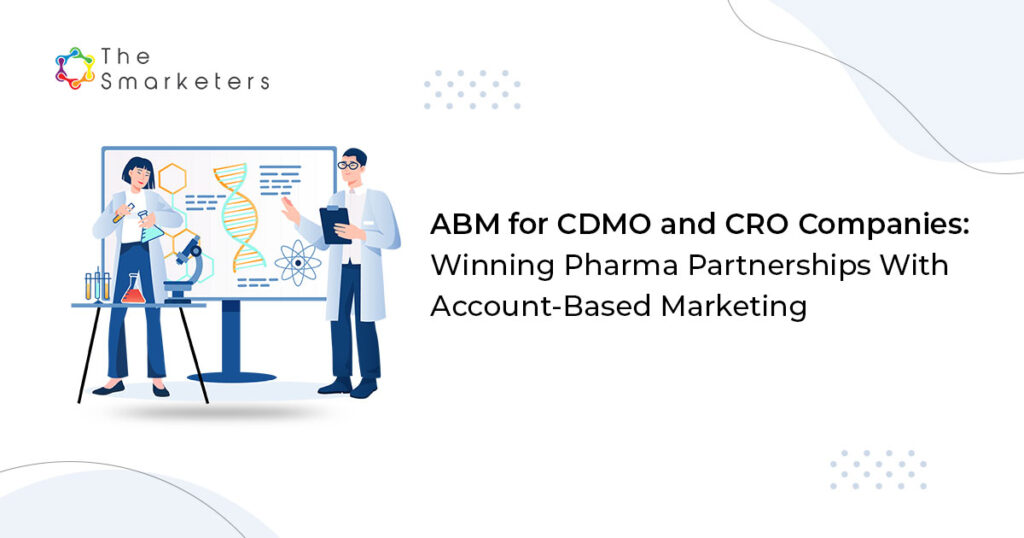
ABM for CDMOs (contract development and manufacturing organisations) and CROs (contract research organisations) is account-based marketing adapted for the specific commercial dynamics of pharmaceutical outsourcing. CDMO and CRO ABM targets a relatively small universe of pharmaceutical, biotech, and specialty pharma companies who are potential partners, often 50 to 200 named accounts globally for a given service capability. The buying committees are complex (scientific, regulatory, procurement, and C-suite stakeholders), the qualification process is technically demanding, and the deals are high-value and long-duration. ABM is the right motion because it concentrates resources on the limited number of accounts that represent genuine opportunities rather than generating broad-based leads that cannot be serviced at the required partnership level.
Why CDMOs and CROs Need ABM
A CDMO with a specific biologics manufacturing capability does not have thousands of potential customers. It has a few hundred pharma and biotech companies globally that are at the right stage of development, have the right molecule types, and have the scale to require outsourced manufacturing at a meaningful level.
Running broad-based demand gen for that universe, high-volume email campaigns, generic conference presence, and programmatic advertising wastes budget on accounts that will never be a fit and dilutes the focus needed to build genuine relationships with the accounts that matter.
ABM matches the business reality: concentrated resources on a small number of high-value targets, over a long relationship-building cycle, with deep personalisation and regulatory expertise content that demonstrates genuine understanding of the client’s development stage and therapeutic area.
CDMO partnerships take an average of 18 months from first contact to first project initiation
The CDMO/CRO Buying Committee
| Stakeholder | Primary Concern | ABM Content Approach |
|---|---|---|
| Scientific/Technical Lead | Capability match, technology fit, quality systems | Technical capability documentation, analytical methods, platform-specific technical notes |
| Regulatory Affairs | CMC documentation capability, GMP compliance, regulatory submission support | Regulatory track record, inspection history, CMC documentation examples |
| Business Development/Procurement | Commercial terms, capacity, contractual terms, IP protection | Partnership models, capacity statements, commercial frameworks |
| Operations/Project Management | Timeline, communication protocols, project governance | Case studies focused on project execution, communication frameworks |
| C-Suite/VP R&D | Strategic fit, long-term partnership potential, reference accounts | Executive briefing materials, peer reference availability, strategic capability roadmap |
Regulatory Expertise Content: The CDMO/CRO Differentiator
The CDMO and CRO market is crowded with organisations claiming equivalent technical capabilities. The most effective differentiation in content is regulatory expertise, demonstrating that you understand the regulatory implications of your clients’ programmes and can proactively support their submission strategies, not just manufacture their molecules.
Regulatory expertise content includes: therapeutic area-specific regulatory pathway guides, case studies of successful CMC submissions, updates and analysis of FDA, EMA, and ICH regulatory developments, and manufacturing platform-specific regulatory considerations. This content reaches regulatory affairs stakeholders at pharma and biotech clients, a stakeholder group that most CDMOs and CROs underserve in their marketing.
Conference ABM for CDMOs and CROs
Industry conferences DCAT Week, CPhI, BIO International, AAPS Annual Meeting are where CDMO and CRO business development happens. But conference presence without ABM preparation produces low-value interactions. Most conference leads are early-stage exploratory conversations that go nowhere.
Conference ABM changes this:
Pre-conference: Identify target attendees from your ABM account list 6 to 8 weeks before the conference. Run personalised outreach to secure meetings before the show floor opens. Use content a relevant regulatory guide or therapeutic area update as the meeting request anchor rather than a generic ‘let us meet at the show’ message.
At conference: Prioritise the 15 to 20 meetings with target ABM accounts. Prepare account-specific briefing materials for each what stage is their pipeline at, what capability questions are most relevant to their current development programmes, who else is attending from their organisation.
Post-conference: Follow up within 48 hours with a specific next step, not a generic follow-up email. Reference the specific conversation. Provide the resource you promised. Connect to the account’s broader ABM sequence.
ABM Programme Structure for CDMOs and CROs
| ABM Tier | Account Count | Treatment | Typical Annual Investment |
|---|---|---|---|
| Tier 1 — Strategic | 8–15 accounts | Full 1:1 treatment: custom content, executive outreach, conference meeting pre-booking, quarterly account reviews | $8,000–15,000 per account |
| Tier 2 — Priority | 25–50 accounts | 1:Few programmatic ABM: therapeutic area content clusters, conference outreach, personalised email sequences | $2,000–4,000 per account |
| Tier 3 — Awareness | 50–150 accounts | 1:Many intent-based campaigns: regulatory updates, webinar invitations, content distribution | $200–500 per account |
About The Smarketers
The Smarketers is India’s first ITSMA-awarded ABM agency and a HubSpot Gold Partner. With 40+ implemented ABM programs and an 85% success rate, they work with B2B technology companies, IT services firms, and life sciences companies to drive pipeline through ABM, demand generation, and RevOps.
Frequently Asked Questions
Why is ABM the right approach for CDMOs and CROs?
CDMO and CRO business development targets a small universe of potential partners, often 50 to 200 accounts globally for a given service capability. ABM concentrates resources on the accounts that represent genuine opportunity, builds the depth of relationship that complex pharma partnerships require, and delivers the regulatory and technical expertise content that scientific and regulatory stakeholders respond to.
What content works best for CDMO and CRO marketing?
Regulatory expertise content performs best: therapeutic area-specific regulatory pathway guides, CMC documentation case studies, analysis of FDA/EMA regulatory developments, and manufacturing platform-specific technical notes. This content reaches regulatory affairs and scientific stakeholders who are und erserved by most CDMO and CRO marketing.
How do you use conferences effectively in CDMO/CRO ABM?
Conference ABM requires pre-show preparation: identifying target attendees from your ABM account list 6 to 8 weeks ahead, running personalised outreach to secure meetings before the floor opens, preparing account-specific briefing materials, and following up within 48 hours with specific next steps. This turns conferences from networking events into structured sales development touchpoints.
How many accounts should a CDMO or CRO target with ABM?
Most CDMOs and CROs should start with 10 to 15 Tier 1 named accounts for full 1:1 ABM treatment, 25 to 50 Tier 2 accounts for programmatic outreach, and a Tier 3 awareness pool of 50 to 150 accounts. The Tier 1 list should be reviewed quarterly accounts that do not progress should be replaced with new targets.