
Table of Contents
- 5 Ways AI Agents Are Changing B2B Marketing in 2026 (And How to Get Started Today)
- ABM Trends for 2026: Scaling Account-Based Marketing with AI and Smart Automations
- B2B Marketing Trends for 2026: AI, Predictive Analytics, and Community-Led Growth
- SaaS Marketing Trends in 2026: Navigating AI, SEO, and Customer Experience
- Boost Your AI Visibility: How to Get Discovered on ChatGPT, Claude, and Perplexity
Imagine spending countless hours manually optimizing your website, only to see minimal improvements in your search rankings. That was the reality for many marketers just a few years ago. However, AI has now revolutionized the SEO landscape, transforming how we approach search engine optimization.
Today, there are over 3,000 AI tools available, nearly 300 of which are specifically designed for SEO. In 2026, AI SEO tools are no longer just a trend—they are an integral part of any successful digital marketing strategy. By analyzing vast amounts of data, predicting search trends, and automating tedious tasks, AI-powered SEO tools are enabling businesses to dramatically increase their online visibility.
As we head into 2026, AI is playing a pivotal role in shaping search engine algorithms. With innovations like Google’s AI-driven Search Generative Experience (SGE) and Bing’s AI-enhanced search, marketers must adapt to a new era of SEO. Machine learning is now central to content creation, providing hyper-personalized results and optimizing user experiences in ways that were once unimaginable.
Are you ready to supercharge your SEO strategy and leave your competitors behind?
In this blog post, we’ll dive into the world of AI SEO, exploring its impact on search engine rankings, the benefits of AI-powered tools, and the top features you should look for.
What is AI SEO, and how does it impact search engine rankings?
Understanding AI SEO
Artificial Intelligence (AI) in Search Engine Optimization (SEO) refers to the use of machine learning algorithms and advanced data analysis techniques to improve website visibility and ranking in search engine results pages (SERPs). AI SEO tools leverage the power of artificial intelligence to automate and enhance various aspects of SEO strategy, from keyword research to content optimization.
How AI Revolutionizes SEO
- Advanced Data Analysis: AI can process vast amounts of data quickly, identifying patterns and insights that humans might miss. This allows marketers to make data-driven decisions in real-time, optimizing SEO efforts as they evolve.
- Predictive Analytics: AI algorithms can forecast trends and anticipate changes in search engine algorithms. In 2026, predictive analytics is crucial for anticipating not just seasonal shifts, but major algorithm updates like Google's AI-based SGE.
- Natural Language Processing (NLP): AI-powered tools can understand and generate human-like text, improving content quality and relevance. NLP also plays a key role in optimizing content for voice search, a growing trend in 2026.
- Automated Optimization: AI can automatically optimize various on-page elements, saving time and reducing human error. AI can continuously analyze SERPs and adjust strategies to stay ahead of competitors.
Key Components of AI SEO
To fully grasp the concept of AI SEO, it’s essential to understand its key components:
Machine Learning Algorithms in SEO
Machine learning algorithms form the backbone of AI SEO tools. These algorithms can learn from data, identify patterns, and make decisions with minimal human intervention. In the context of SEO, machine learning algorithms can:
- Analyze search patterns and user behavior: New-age AI tools can track user behavior across devices, offering insights that are tailored for multi-channel SEO.
- Predict keyword trends and search volumes: AI can now provide forecasts on keyword performance across multiple regions, making global SEO strategies more efficient.
- Optimize content for specific target audiences: AI enables hyper-targeted SEO, optimizing content not only for search engines but for specific demographic and psychographic profiles.
- Identify link-building opportunities: AI tools are now using predictive data to identify which websites will likely link back, reducing guesswork and speeding up the link-building process.
Here are some practical ways machine learning is applied in SEO:
| Application | Description | Impact on SEO |
|---|---|---|
| Keyword Research | Predicts valuable keywords based on search trends and user intent | Improves content relevance and targeting |
| Content Optimization | Suggests improvements to content structure and readability | Enhances user experience and search engine rankings |
| Link Building | Identifies high-quality link opportunities | Boosts domain authority and search rankings |
| SERP Analysis | Analyzes competitor rankings and strategies | Helps in developing more effective SEO strategies |
Natural Language Processing (NLP) in SEO
Natural Language Processing is a branch of AI that focuses on the interaction between computers and human language. In SEO, NLP plays a crucial role in:
- Understanding user intent behind search queries: In 2026, NLP is integral to the shift from keyword-based SEO to intent-based optimization, where content is optimized based on the meaning behind user queries.
- Optimizing content for semantic search: With Google's shift to semantic search and user intent, NLP ensures content matches not only keywords but also the user’s intent.
- Improving the relevance and quality of content: AI-powered NLP tools now generate content that speaks directly to the reader's needs and expectations.
- Enhancing voice search optimization: NLP is key to improving voice search results by understanding conversational queries and adjusting content accordingly.
How NLP Improves Content Optimization
NLP helps in creating more natural, user-friendly content that aligns with search engine algorithms. Here’s how:
- Topic Modeling: NLP can identify the main topics and subtopics in a piece of content, ensuring comprehensive coverage of a subject.
- Entity Recognition: It can identify and categorize named entities (people, places, organizations) in text, helping with content structuring and internal linking.
- Sentiment Analysis: NLP can gauge the overall sentiment of content, helping to create more engaging and emotionally resonant pieces.
- Readability Analysis: It can assess the complexity of text and suggest improvements for better readability. In 2026, NLP tools can help optimize content for multiple reading levels to target different user demographics.
Predictive Analytics in SEO
Predictive analytics uses historical data and statistical algorithms to forecast future trends. In SEO, this capability is invaluable for:
- Anticipating changes in search engine algorithms: AI tools can now predict algorithm updates, allowing businesses to adjust strategies preemptively.
- Predicting seasonal trends in search behavior: With AI, SEO strategies can now anticipate changing trends based on previous years’ data, leading to more proactive content creation.
- Forecasting the performance of specific keywords or content pieces: SEO professionals now rely on predictive models to estimate the ROI of keyword-focused content before publishing.
- Identifying emerging topics and trends before they become mainstream: AI enables real-time trend tracking, allowing marketers to create content for topics that hold the potential to go viral.
Leveraging Predictive Analytics for SEO Success
Here are some ways you can use predictive analytics to stay ahead in your SEO efforts:
- Trend Forecasting: Predict upcoming trends in your industry and create content ahead of time.
- Content Performance Prediction: Estimate how well a piece of content will perform before publishing it.
- Algorithm Update Preparation: Anticipate potential impacts of search engine algorithm updates and adjust your strategy proactively.
- Competitor Strategy Analysis: Predict your competitors’ next moves based on their historical data and current trends.
Voice Search Optimization
With the rise of virtual assistants and smart speakers, voice search optimization has become a crucial aspect of AI SEO. Here’s how AI is shaping voice search optimization:
- Understanding Natural Language Queries: AI helps interpret the intent behind conversational voice searches. In 2026, AI tools are capable of understanding not only direct commands but also nuanced, complex voice queries.
- Optimizing for Featured Snippets: AI tools can help create content that’s more likely to be selected for voice search results. Featured snippets have become a key area for voice search optimization.
- Local SEO for Voice: AI can optimize local business information for voice-based local searches. Voice search has become increasingly tied to local SEO, as users rely on voice assistants to find nearby businesses.
- Schema Markup Implementation: AI can automate the process of adding structured data to your website, making it easier for voice assistants to understand and present your content.
The Impact of AI on SEO Rankings
Now that you have a comprehensive understanding of AI SEO and its components, let’s explore how AI SEO specifically impacts search engine rankings, providing you with actionable insights to improve your website’s visibility and performance in search results.
Improved Keyword Research
AI-powered SEO tools have revolutionized keyword research, giving you a competitive edge in search rankings. By analyzing vast amounts of data from multiple sources, including SERPs, social media platforms, and competitor websites, AI tools provide deeper insights than ever before.
- Discover long-tail keywords with high potential
- Identify semantic variations and related terms
- Understand user intent behind search queries
- Predict keyword trends and seasonal fluctuations
Here’s a comparison of traditional keyword research methods versus AI-powered approaches:
| Aspect | Traditional Methods | AI-Powered Methods |
|---|---|---|
| Data sources | Limited to a few platforms | Multiple sources, including real-time data |
| Analysis speed | Slow and manual | Rapid and automated |
| Keyword suggestions | Based on exact matches | Includes semantic variations and related terms |
| User intent analysis | Limited or manual | Advanced and automated |
| Trend prediction | Basic or non-existent | Accurate and data-driven |
Benefit: AI uncovers hidden opportunities, identifying niche keywords that competitors may overlook, targeting less competitive but highly relevant terms.
Enhanced content optimization
AI SEO tools have transformed the way you approach content optimization, making it more precise and effective. These advanced tools go beyond simple keyword density checks and provide you with comprehensive insights to create content that resonates with both search engines and users.
Here are some ways AI enhances your content optimization efforts:
- Natural Language Processing (NLP): AI tools use NLP to analyze your content’s readability, tone, and sentiment. This helps you create more engaging and user-friendly content that aligns with your target audience’s preferences.
- Topic clustering: AI algorithms can identify related topics and sub-topics, helping you create more comprehensive and authoritative content. This approach allows you to cover a subject in-depth, increasing your chances of ranking for multiple related keywords.
- Content gap analysis: AI-powered tools can analyze top-ranking pages for your target keywords and identify topics or subtopics that you haven’t covered. This insight helps you fill content gaps and create more comprehensive resources.
- Semantic optimization: AI tools can suggest semantically related terms and phrases to include in your content, helping you optimize for context rather than just exact-match keywords.
- Real-time optimization suggestions: Some AI SEO tools provide real-time recommendations as you write, helping you optimize your content on the fly.
Benefit: With these capabilities, AI tools improve content relevance, increasing rankings and driving more qualified traffic.
Balancing AI-Generated and Human-Created Content
While AI can generate content quickly, it’s crucial to maintain a balance:
- Use AI for initial drafts or ideas: AI can quickly generate initial content drafts, providing a solid foundation for further refinement and optimization.
- Have human editors review and refine AI-generated content: Human editors refine AI-generated content to ensure it meets quality standards, aligns with brand voice, and resonates with the target audience.
- Ensure the content aligns with your brand voice and style: While AI excels in generating text, human input is essential to adapt the content to your brand’s unique voice and style for authenticity.
- Use AI-generated content as a supplement, not a replacement for human creativity: AI-generated content should complement human creativity by handling repetitive tasks, while human writers add depth, creativity, and emotional resonance to the final piece.
Technical SEO optimization
AI has made significant strides in optimizing technical SEO, enabling faster issue identification and resolution.
- Site Structure Optimization: AI tools suggest improvements for crawlability and user experience, including optimizing internal linking.
- Page Speed Optimization: AI analyzes loading speed and provides actionable suggestions like image compression and code minification.
- Mobile Optimization: AI helps identify and resolve mobile-specific issues, ensuring strong performance on mobile-first indexed sites.
- Schema Markup Implementation: AI automates structured data markup, making it easier for search engines to understand content and display rich snippets.
- Automated Error Detection: AI crawlers monitor websites for technical issues, alerting you to problems before they affect rankings.
Benefit: AI streamlines technical SEO, allowing you to resolve complex issues quickly, ensuring your site meets the latest search engine requirements.
To illustrate the impact of AI on technical SEO, consider the following table comparing manual and AI-assisted technical optimization:
| Technical SEO Task | Manual Approach | AI-Assisted Approach |
|---|---|---|
| Site audit | Time-consuming, prone to human error | Rapid, comprehensive, and accurate |
| Page speed analysis | Limited to basic metrics | In-depth analysis with prioritized recommendations |
| Mobile optimization | Relies on manual testing | Automated testing across multiple devices and scenarios |
| Schema markup | Requires extensive knowledge | Automated generation and implementation suggestions |
| Error detection | Periodic manual checks | Continuous monitoring and real-time alerts |
Improved Data Analysis and Insights
AI SEO tools process large datasets quickly and accurately, offering deep insights into search trends and user behavior.
- Search Intent Analysis: AI identifies user intent behind search queries, enabling better content targeting.
- Content Gap Analysis: AI highlights content areas your competitors cover but you haven't, helping you create more comprehensive content.
- Semantic Relationship Mapping: AI maps relationships between keywords and topics, aiding in topic clustering and content relevance.
- Competitor Performance Tracking: AI continuously monitors competitors, providing insights to improve your positioning.
Benefit: Access to actionable insights helps you make data-driven decisions and refine SEO strategies for long-term success.
Enhanced ROI Tracking and Attribution
AI tools provide more accurate ROI measurement by tracking the impact of specific SEO actions on rankings, traffic, and conversions.
- Tracking SEO Actions: AI can track the impact of specific changes on rankings and traffic.
- Conversion Attribution: AI attributes conversions to specific SEO strategies, providing clarity on what’s working.
- ROI Forecasting: AI tools predict potential ROI for proposed SEO initiatives, helping you allocate resources effectively.
- Long-Term Value Analysis: AI tracks the long-term impact of SEO efforts, giving you insights into sustainable growth.
Benefit: Enhanced tracking and attribution models help marketers justify their SEO budgets and make more informed decisions.
Predictive SEO and Trend Forecasting
One of the most exciting benefits of AI SEO tools is their ability to predict future trends and search behaviors. By analyzing historical data and current patterns, AI tools can forecast:
- Upcoming search trends in your industry: Anticipate shifts in user interests, allowing you to create content ahead of time.
- Potential algorithm changes and their impacts: Predict changes in search engine algorithms and adjust strategies proactively.
- Seasonal fluctuations in search volume: Plan content around anticipated seasonal search behavior, maximizing visibility.
- Emerging topics and keywords: Stay ahead of competitors by identifying new and rising topics before they become mainstream.
Benefit: With predictive insights, you can optimize your content and SEO strategies for future trends, ensuring your site is always ahead of the competition.
Top AI SEO Tools to Supercharge Your Rankings in 2026
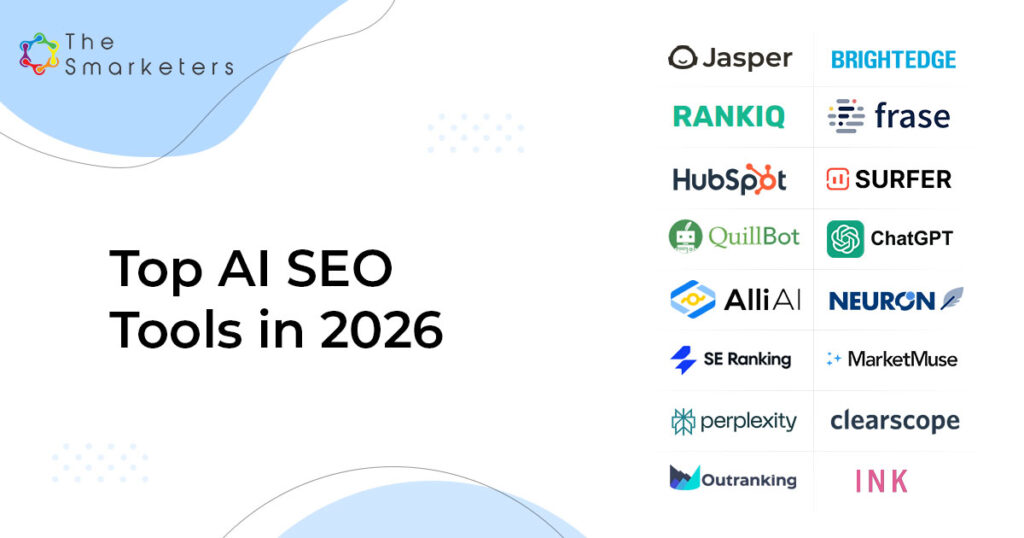
We’ve compiled a list of the most relevant and useful AI SEO tools you can use in 2026:
A. Jasper

Jasper is a content creation powerhouse that uses AI to help marketers generate SEO-optimized content at scale. It’s perfect for producing long-form content, meta descriptions, and content repurposing.
Key Features:
- Generates SEO-optimized long-form content
- Creates meta descriptions, title tags, and short-form content
- Supports content repurposing for multiple platforms
- Customizable templates for varied content types
B. Surfer SEO
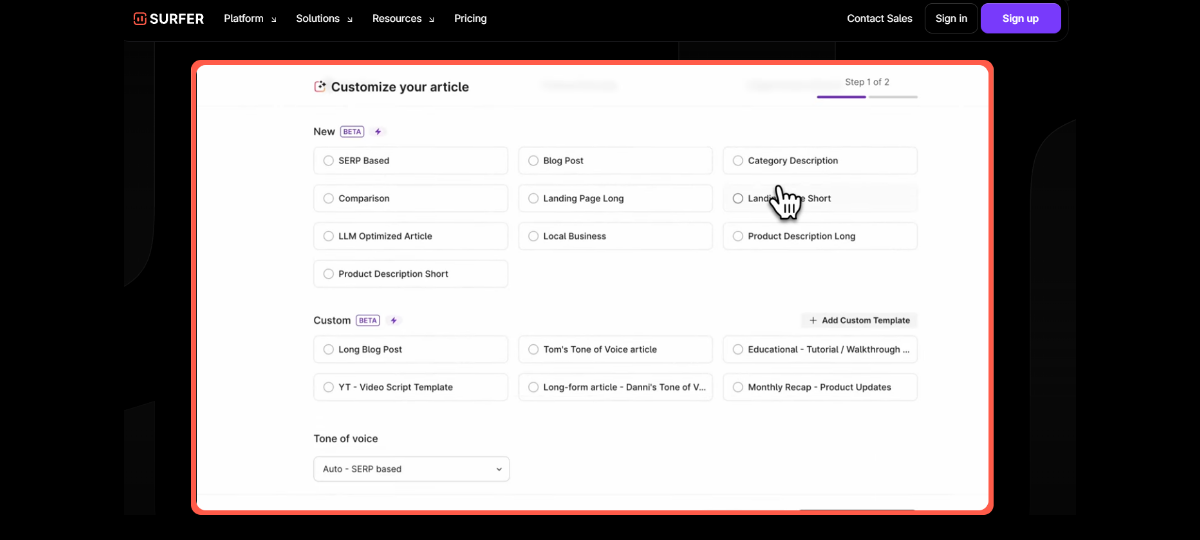
Surfer SEO combines data-driven content optimization with SERP analysis to enhance on-page SEO. It offers AI-powered content editing and keyword clustering to align your content with search engine expectations.
Key Features:
- AI-powered content editor with real-time SEO suggestionsSERP analyzer to identify ranking factors
- Keyword clustering and content planning tools
- Content audit and optimization recommendations
c. MarketMuse
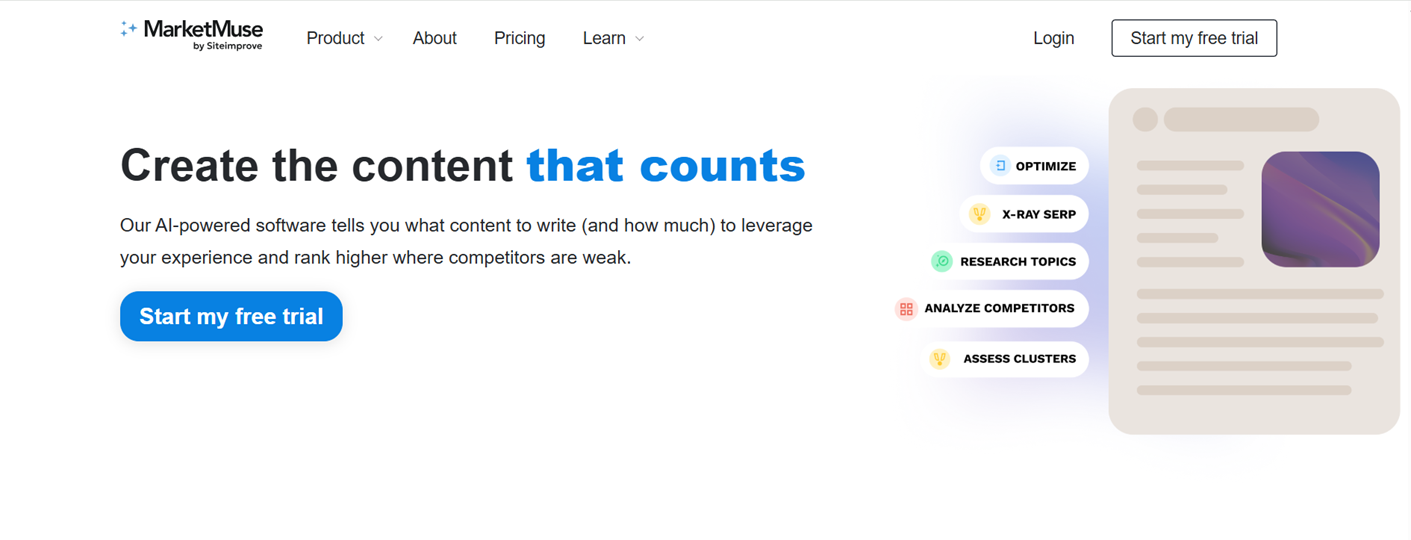
MarketMuse uses AI to create data-driven content strategies that help you improve rankings and optimize existing content. It offers comprehensive content audits and gap analysis.
Key Features:
- AI-driven content audits and strategy development
- Identifies content gaps and opportunities
- Generates AI-powered content briefs and outlines
Provides optimization suggestions based on high-ranking content
D. Clearscope
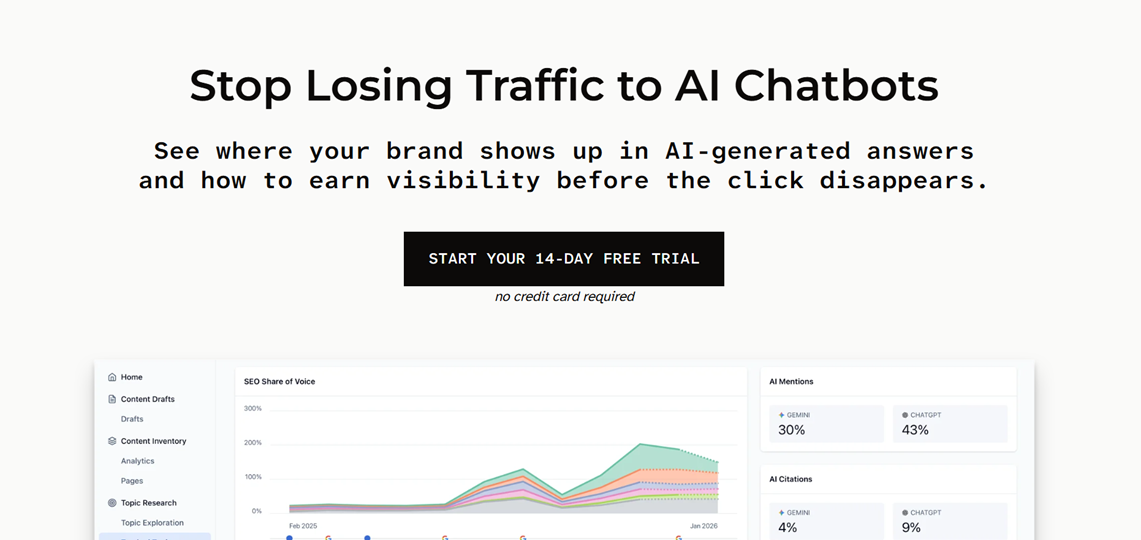
Clearscope is designed to help you create highly relevant and comprehensive content that aligns with top-ranking pages for your target keywords. It focuses on content depth and relevance.
Key Features:
- Content optimization based on top-ranking pages
- Generates content briefs and outlines for targeted keywords
- Identifies content gaps for better coverage
- Tracks content performance over time
E. Frase
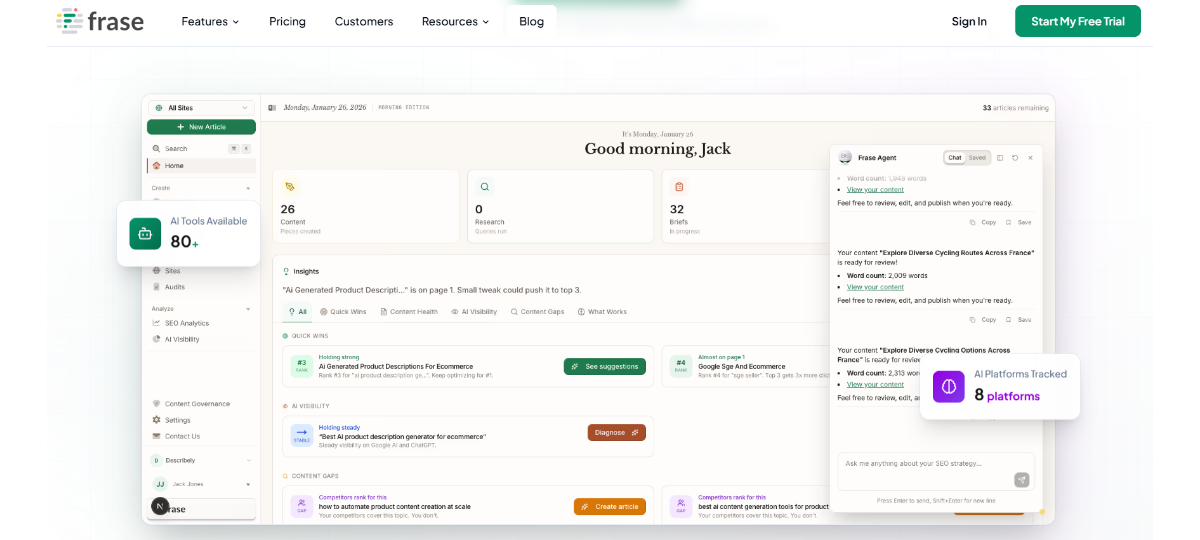
Frase offers AI-driven content research and optimization, helping you craft content that directly aligns with user queries. It’s particularly strong in providing insights into question-based search intent.
Key Features:
- AI-powered content briefs and outlines
- Question research and answering for SEO
- Topic modeling and SERP analysis
AI-assisted content writing for SEO
F. NeuronWriter
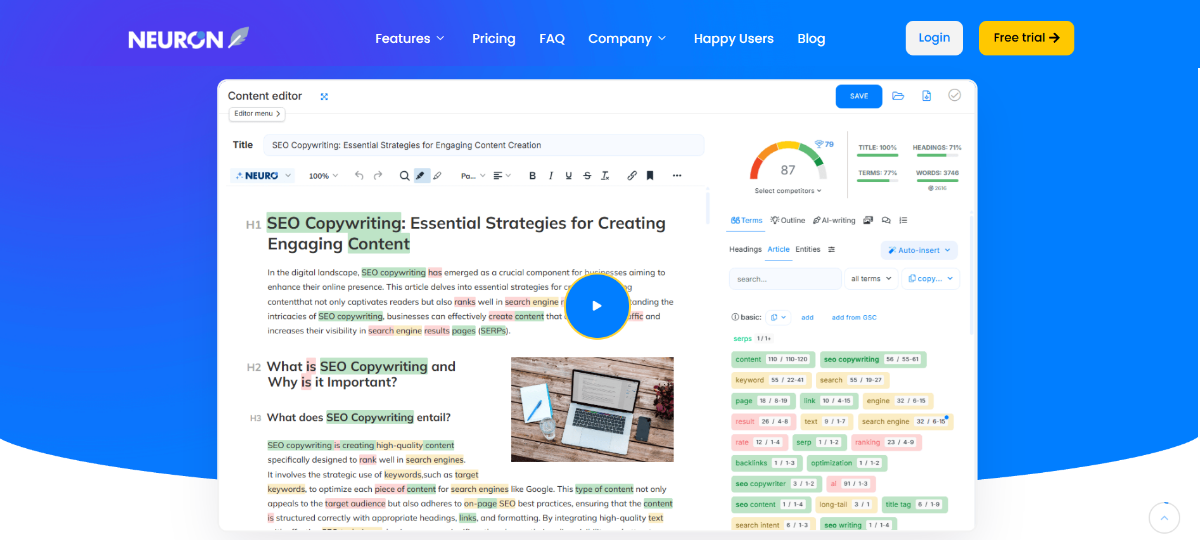
NeuronWriter optimizes content for featured snippets and semantic relevance. It uses NLP to analyze search intent and improve content targeting for better ranking.
Key Features:
- Conducts keyword research and generates AI-powered content outlines
- Optimizes content for featured snippets and semantic search
- Tracks content performance and ranks over time
- Provides actionable insights based on top-ranking content
G. RankIQ
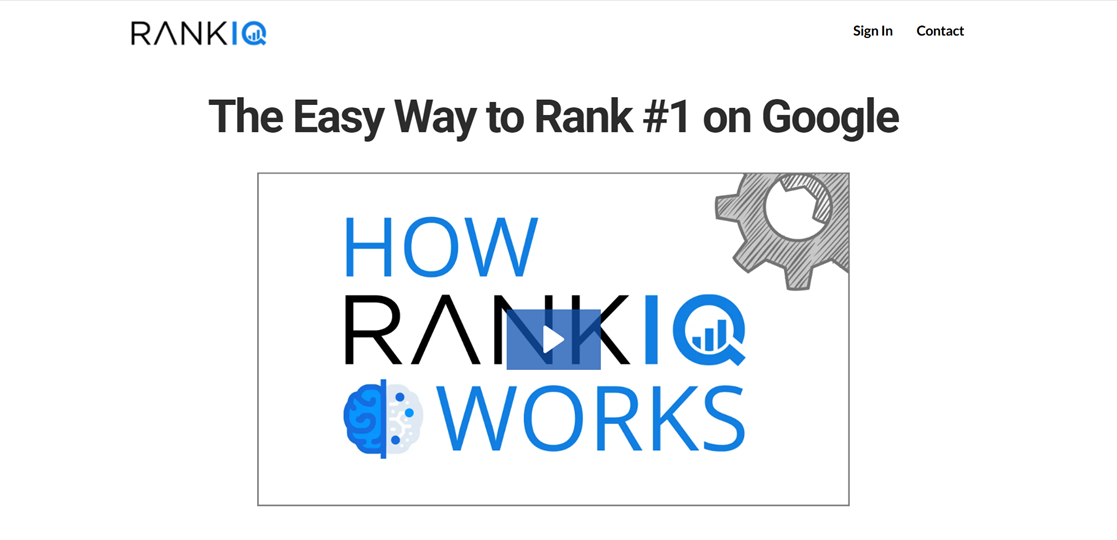
RankIQ specializes in niche SEO, offering tailored recommendations for content optimization in specific industries. It’s perfect for creating content that ranks well in less competitive markets.
Key Features:
- Identifies low-competition, high-potential keywords
- Provides AI-powered content briefs for niche topics
- Optimizes existing content for better rankings
- Tracks content performance within specific niches
H. SE Ranking
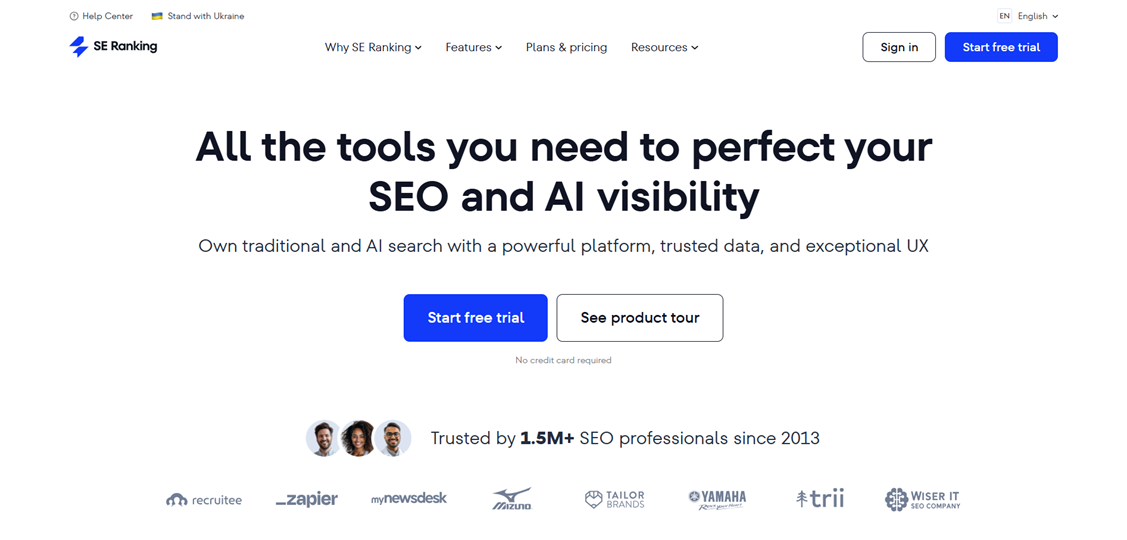
SE Ranking is a comprehensive SEO platform with AI-powered keyword suggestions, competitor analysis, and real-time trend tracking. It’s ideal for businesses looking for an all-in-one SEO solution.
Key Features:
- AI-powered keyword research and suggestions
- Site audit and competitor benchmarking
- Backlink monitoring and analysis
- Real-time trend tracking and actionable insights
I. Surfer SEO

Surfer SEO is a leading tool for on-page optimization, offering detailed SERP analysis and content auditing features. Its AI-powered editor provides tailored optimization advice for higher search rankings.
Key Features:
- AI-driven content editor for real-time optimization
- SERP analysis to identify ranking factors
- Keyword clustering and content planning
- Continuous content audit and performance analysis
J. INK
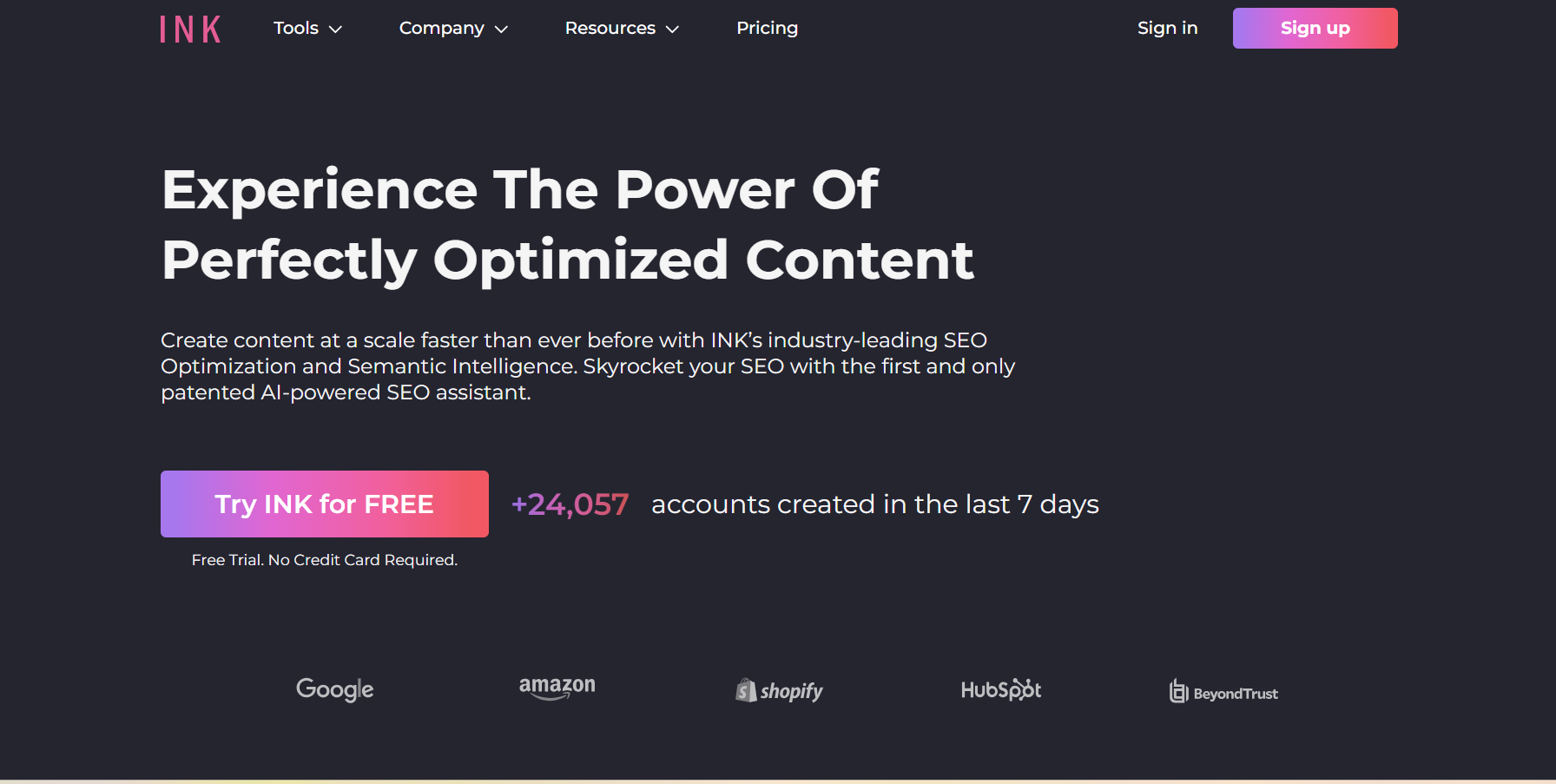
INK is an AI-powered writing platform that balances SEO best practices with readability. It provides real-time optimization and helps marketers create content that is both SEO-friendly and engaging.
Key Features:
- Real-time SEO optimization for content creation
- Readability analysis and keyword density checks
- Plagiarism detection and style improvement suggestions
- AI-assisted content writing to improve user engagement
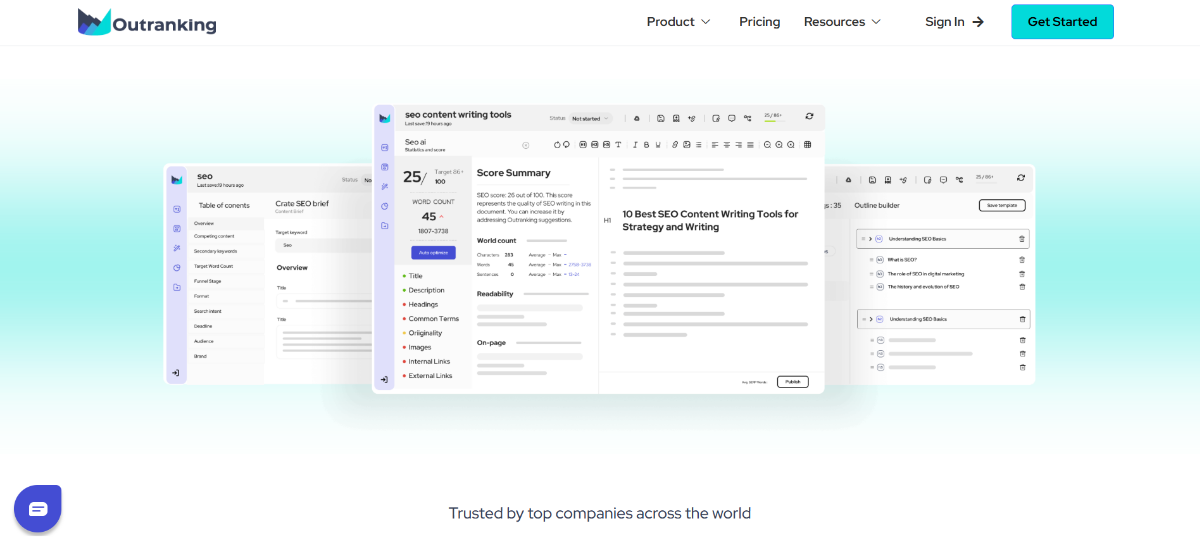
K.OutRanking
OutRanking is an AI-powered content creation platform designed for marketing agencies and content-heavy websites. It combines research, writing, and optimization in one tool to streamline workflows.
Key Features:
- In-depth content research for SEO optimization
- AI-assisted content briefs and long-form content creation
- Tracks content performance with detailed insights
- Continuous optimization recommendations
L. BrightEdge
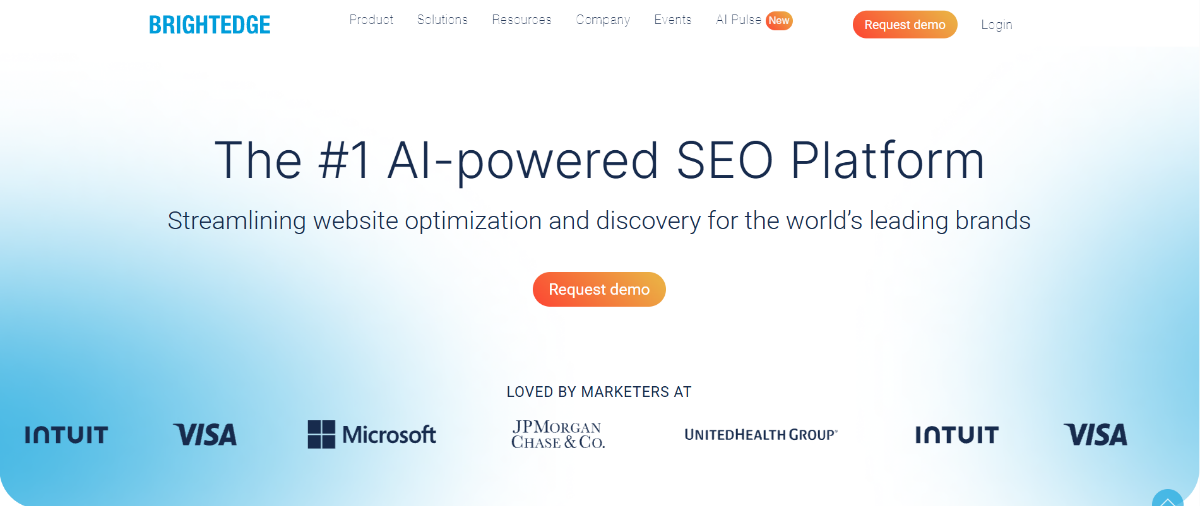
BrightEdge is an enterprise-level SEO platform with AI-driven tools for content optimization and real-time SERP tracking. It’s particularly useful for large organizations with complex SEO campaigns.
Key Features:
- AI-powered content optimization and analysis
- Real-time SERP tracking and competitor benchmarking
- Custom reporting and dashboards
- Site health checks and technical SEO analysis
M. ChatGPT (OpenAI)
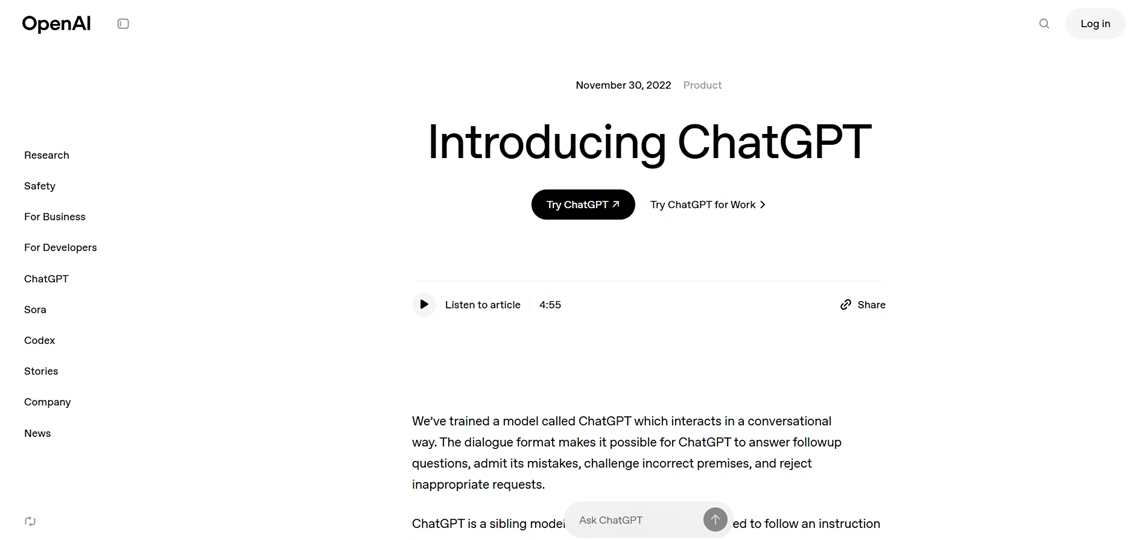
ChatGPT’s advanced natural language processing capabilities make it a versatile tool for content ideation, keyword expansion, and SEO strategy development.
Key Features:
- Content brainstorming and keyword expansion
- SEO strategy suggestions and meta description generation
- Content optimization and structure recommendations
- Helps streamline content creation for SEO
N. Perplexity AI

Perplexity AI offers advanced insights into user intent and search relevance, helping you refine your content to match search engine expectations. It’s a powerful tool for content research and optimization.
Key Features:
- In-depth topic research and content analysis
- Search intent analysis to guide content creation
- Identifies related topics and keywords for better ranking
- Content ideation based on user queries
O. AI Search Grader
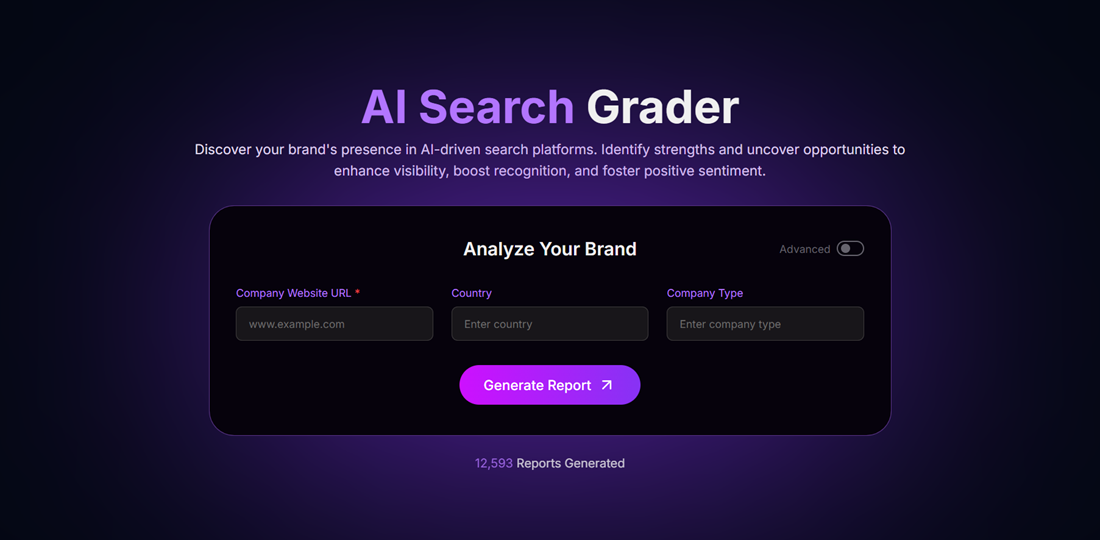
AI Search Grader offers advanced insights into your website’s SEO performance. It helps identify technical SEO issues, track competitors, and simulate how your site is viewed by search engines.
Key Features:
- Comprehensive website audits and performance tracking
- Identifies technical SEO issues and optimization opportunities
- Simulates search engine behavior for better visibility
- Tracks competitors’ SEO strategies for comparative insights
P. AlliAI
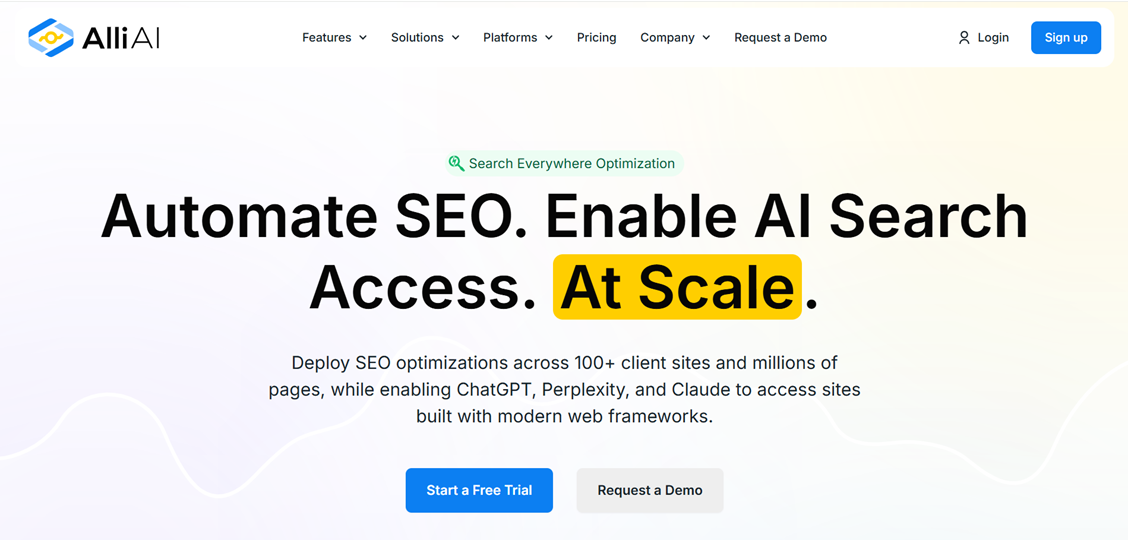
AlliAI is a versatile AI-powered platform that provides end-to-end SEO capabilities, including keyword research, content optimization, and real-time SERP tracking.
Key Features:
- Real-time SERP tracking and keyword research
- Automated content optimization suggestions
- Backlink profile management and competitor analysis
- Predictive insights for upcoming SEO trends
AI SEO Tools Comparison — 2026
| Tool | Primary Purpose | Key Capabilities |
|---|---|---|
| Jasper | Content Generation | AI-generated SEO content at scale; meta/tag creation; support for multiple formats |
| Surfer SEO | Content Optimization | SERP analysis; AI content editor; keyword clustering; real-time ranking insights |

| MarketMuse | Strategic Content Planning | Content audits; topic modeling; gap analysis; brief generation |

| Clearscope | Content Relevance | Content keyword coverage; outline generation; topic depth analysis |

| Frase | Intent-Driven Content | User query analysis; content briefs; question-based optimization |

| NeuronWriter | Semantic Optimization | Keyword & snippet optimization; performance tracking; semantic insights |

| RankIQ | Niche SEO | Low-competition keyword discovery; niche content briefs; performance tracking |

| SE Ranking | All-in-One SEO | Keyword research; site audits; competitor analysis; backlink monitoring |

| INK | Writing + SEO Balance | Real-time SEO suggestions; readability support; keyword density tools |

| OutRanking | Content Workflow | Research to publication workflow; briefs & long-form editing |

| BrightEdge | Enterprise SEO | Large-scale optimization; real-time SERP tracking; competitor benchmarking |

| ChatGPT (OpenAI) | SEO Assistant | Content brainstorming; keyword expansion; meta/title suggestions |

| Perplexity AI | Research/Intent Discovery | Topic research; intent analysis; content concept discovery |

| AI Search Grader | Visibility Score | Site audits; content relevance scoring; competitor comparison |
| Alli AI | Technical & On-Page SEO | Automated on-page fixes; rule-based optimizations; SERP tracking |
As you explore these AI SEO tools, remember that the key to success lies in combining their capabilities with your expertise and understanding of your target audience. Each tool offers unique features and strengths, so consider your specific needs and goals when choosing the right combination of tools for your SEO strategy. In the next section, we’ll discuss best practices for using AI SEO tools to maximize their effectiveness and achieve optimal results.
Best Practices for Using AI SEO Tools in 2026
As we move into 2026, the effectiveness of AI SEO tools is more important than ever. These tools can help streamline your SEO efforts, but only when implemented properly. Here’s how to maximize their potential:
1. Start with a Clear Strategy
Before diving into AI SEO tools, it’s critical to have a well-defined SEO strategy. This allows you to leverage AI tools more effectively to achieve meaningful results
Key Steps:
- Define your SEO goals (e.g., increase traffic, improve rankings, enhance user experience)
- Understand your target audience and their search behaviors
- Analyze competitors' strategies and identify gaps
- Determine your KPIs (e.g., organic traffic, conversion rates, keyword rankings)
2. Choose the Right Tools for Your Needs
With so many AI SEO tools available, selecting the right ones based on your goals and resources is crucial
Consider the following factors:
- Budget: Choose tools that offer the best value for your investment.
- Features: Focus on tools that cover key areas such as content creation, keyword research, and technical SEO.
- Ease of Use: Select tools with user-friendly interfaces that fit your team’s workflow.
- Integration: Ensure compatibility with your CMS and other marketing tools.
- Scalability: Opt for tools that can grow with your SEO efforts.
Here’s a comparison of different tool categories to help you make an informed decision:
| Tool Category | Best For | Key Features | Considerations |
|---|---|---|---|
| Keyword Research | Content strategy | Trend analysis, search volume, keyword difficulty | Data accuracy, update frequency |
| Content Optimization | On-page SEO | Readability analysis, keyword suggestions, content scoring | Integration with CMS, multilingual support |
| Technical SEO | Site performance | Site audits, crawl analysis, mobile optimization | Learning curve, customization options |
| Link Building | Off-page SEO | Backlink analysis, outreach automation, competitor link profiling | Database size, link quality metrics |
| Rank Tracking | Performance monitoring | SERP tracking, local SEO monitoring, competitor analysis | Reporting capabilities, update frequency |
3. Integrate AI Tools with Your Existing Workflow
Seamless integration of AI SEO tools into your existing workflow enhances efficiency. This integration will prevent you from adding unnecessary complexity to your processes.
Tips for Successful Integration:
- Use API connections to link AI tools with your CMS or analytics platforms.
- Automate reporting to eliminate manual data collection and streamline analysis.
- Develop Standard Operating Procedures (SOPs) for consistent use of tools across teams.
- Regularly review your workflow to ensure optimal tool usage and performance.
4. Continuous Learning and Adaptation
AI SEO tools are constantly evolving, and so are search engine algorithms. Staying informed ensures you can make the most of new features and stay ahead of industry shifts
How to Stay Adaptable:
- Attend webinars and conferences focused on AI SEO and industry trends.
- Follow SEO newsletters and blogs to stay updated on advancements.
- Engage with online communities to exchange insights and learn from peers.
- Experiment with new tool features and testing methods to refine strategies.
5. Combine AI Insights with Human Expertise
AI is powerful, but human expertise is irreplaceable. Combining both provides the best of both worlds.
Best Practices for Collaboration:
- Use AI-generated insights as starting points and apply critical thinking to them.
- Add your industry knowledge and understanding of user intent to AI recommendations.
Test AI-driven strategies and continuously refine them based on real-world results.
6. Monitor and Analyze Performance Regularly
To ensure your AI SEO tools are delivering results, set up a routine for monitoring and data analysis. This helps you spot issues early and optimize continuously
Actionable Steps:
- Create custom dashboards that integrate data from various AI tools to get a comprehensive view of your SEO performance.
- Regularly track progress against KPIs to identify areas for improvement.
Use A/B testing to validate AI-driven strategies and refine them further.
7. Prioritize Data Privacy and Security
As AI tools collect and analyze large amounts of data, it’s essential to prioritize data security. Compliance with data protection regulations (GDPR, CCPA) is critical
Key Considerations:
- Review the privacy policies of each tool you use.
- Ensure compliance with data regulations.
- Implement strong access controls and authentication to safeguard sensitive data.
Regularly audit your data handling practices to maintain security.
8. Collaborate Across Teams
AI SEO tools can benefit multiple departments, from content to marketing to product teams. Cross-functional collaboration ensures that the insights provided by AI are maximized
Collaboration Tips:
- Share relevant AI insights with content creators, marketing, and product teams for a holistic approach.
- Hold training sessions to familiarize team members with using AI tools effectively.
Use AI-driven insights to collaborate on cross-functional projects for better alignment in your SEO strategy.
9. Set Realistic Expectations
AI tools can accelerate SEO, but they are not a magic fix for instant results. Set realistic expectations for both the time and effort required to achieve results
Key Points to Communicate:
- SEO remains a long-term strategy, and AI is just one part of the equation.
- Understand that AI tools help optimize processes, but results still depend on effective strategy execution.
Communicate timelines and achievable outcomes to stakeholders to keep expectations aligned.
10. Continuously Optimize Your AI SEO Toolkit
AI SEO is constantly advancing, and so should your toolkit. Regularly assess the performance of your tools to ensure you're using the most effective solutions
Optimization Tips:
- Review the performance of your tools every quarter.
- Stay updated on new market entrants and evaluate their potential.
- Continuously assess the ROI of each tool you use.
- Be willing to replace underperforming tools with newer, more effective alternatives.
By following these 2026 best practices, you’ll maximize the impact of your AI SEO tools, enhance collaboration across teams, and ensure your SEO strategies are adaptable and future-ready. With continuous learning and a thoughtful approach to integrating AI into your workflows, you’ll stay ahead of the competition and see measurable improvements in your SEO results.
Conclusion: Embracing AI in SEO for 2026 and Beyond
As we wrap up our exploration of AI SEO tools and their best practices, it’s clear that AI is no longer a mere supplement to SEO—it has become integral to how businesses optimize their online presence. In 2026, AI-powered SEO tools are not just helping marketers streamline tasks but are also redefining the way SEO strategies are developed, implemented, and measured.
Staying Competitive with AI SEO
To successfully implement AI SEO tools, start by establishing a clear strategy. Define your SEO goals, understand your audience, and set measurable KPIs. Choosing the right AI tool for your business needs is just as important. Ensure that the tools align with your goals, offer the right features, and integrate seamlessly with your existing systems. It's also crucial to stay agile—AI is evolving rapidly, and so are search engine algorithms. This means you should continuously adapt your strategies and optimize your toolset to stay ahead.
Adapting and Evolving with AI Tools
In 2026, the use of AI in SEO continues to grow more sophisticated. AI-driven content optimization is now more precise, predictive analytics is better at forecasting trends, and voice search optimization is becoming a key focus. AI tools will enable a deeper understanding of user intent, making personalized search experiences the norm.
However, while AI offers incredible potential, it’s still important to combine it with human oversight. AI excels in providing data-driven recommendations, but it’s your expertise and creativity that ensure the content truly speaks to your audience. Whether it’s content creation, keyword research, or technical SEO audits, AI tools can automate routine tasks and give you insights faster, but your strategic decisions based on these insights will ultimately determine your success.
Building a Future-Ready SEO Strategy
To maximize the benefits of AI SEO tools, it’s essential to integrate them into your workflow effectively. This includes automating reporting, integrating with your CMS, and creating standard operating procedures (SOPs) for your team. With the right setup, AI tools can become a seamless part of your SEO strategy, enhancing both efficiency and output quality.
As AI SEO tools evolve, so should your approach. Keep updating your toolkit, experimenting with new features, and staying informed on industry trends. By doing so, you’ll be better equipped to handle the rapid pace of change in SEO and maintain a competitive edge.
Ethical Considerations in AI SEO
With the rapid adoption of AI in SEO, ethical considerations are more important than ever. As you integrate AI tools into your SEO strategy, here are key ethical practices to keep in mind:
-
Transparency: Be open about your use of AI in content creation and optimization. Ensure that both stakeholders and users are aware of how AI is influencing the content they engage with.
-
Data Privacy: Protect user data and comply with regulations such as GDPR and CCPA. Ensure that AI tools are used in a way that respects privacy and complies with data protection laws.
-
Avoiding Manipulation: Use AI to enhance the user experience and provide value, not to manipulate search engine algorithms. Focus on delivering quality content that meets user intent.
-
Diversity and Inclusivity: AI algorithms can sometimes carry biases. Be proactive in addressing potential biases in AI-driven content and aim for inclusive SEO practices that reflect diverse perspectives.
The Smarketers: Your Partner in AI SEO Success
At The Smarketers, we specialize in helping businesses integrate AI-driven SEO strategies that deliver measurable growth. From AI-powered content creation to predictive analytics and technical SEO optimizations, our team is equipped to guide you through every step of your SEO journey.
Get in touch with us today to learn how we can help your brand harness the full power of AI in SEO to improve rankings, drive traffic, and stay ahead of the competition.