Table of Contents
Need help with B2B Marketing?
Let the smarketers’ team drive your pipeline with data-led campaigns and AI-powered growth strategies.
An industrial distributor in APAC can carry 40,000 SKUs, serve 2,000 accounts, and still be invisible the moment a maintenance engineer types a part number into a search bar or asks an AI assistant which supplier stocks it locally. The relationships are real, the counter business is steady, and the pipeline is quietly eroding one unanswered search at a time. Younger procurement teams are not calling the rep they inherited; they are shortlisting whoever shows up with stock, specs, and a price.
The behavior shift is measurable. 94% of B2B buyers now use generative AI during the purchase process, and Gartner finds 61% of B2B buyers prefer a rep-free buying experience. For distribution businesses built entirely on rep relationships, that number is the strategic alarm bell. It does not mean reps stop mattering; it means the first interaction moved online, and whoever owns that first interaction sets the shortlist.
This playbook covers the four moves that separate growing APAC distributors from shrinking ones: digitizing the catalog and channel, capturing part-level and application demand through SEO and AEO, arming field sales teams with content instead of just price lists, and running the whole operation on one CRM. It closes with a case study breakdown from our industrial and channel-partner work at The Smarketers, and a frank section on when this playbook should wait.
Digitizing the Traditional Distribution Channel
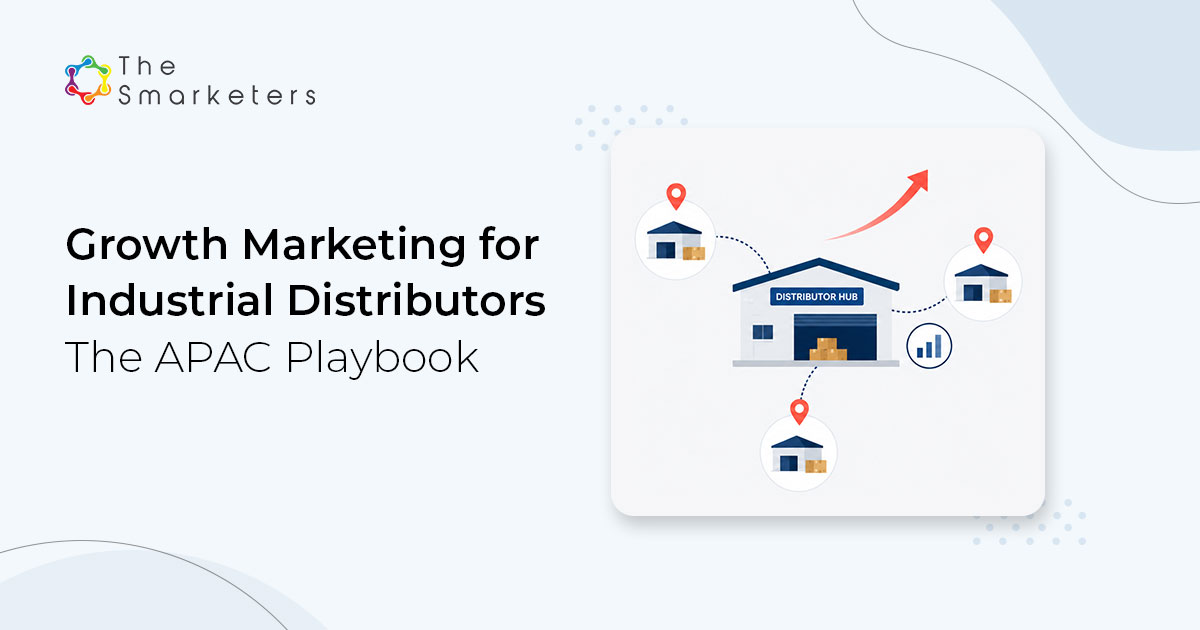
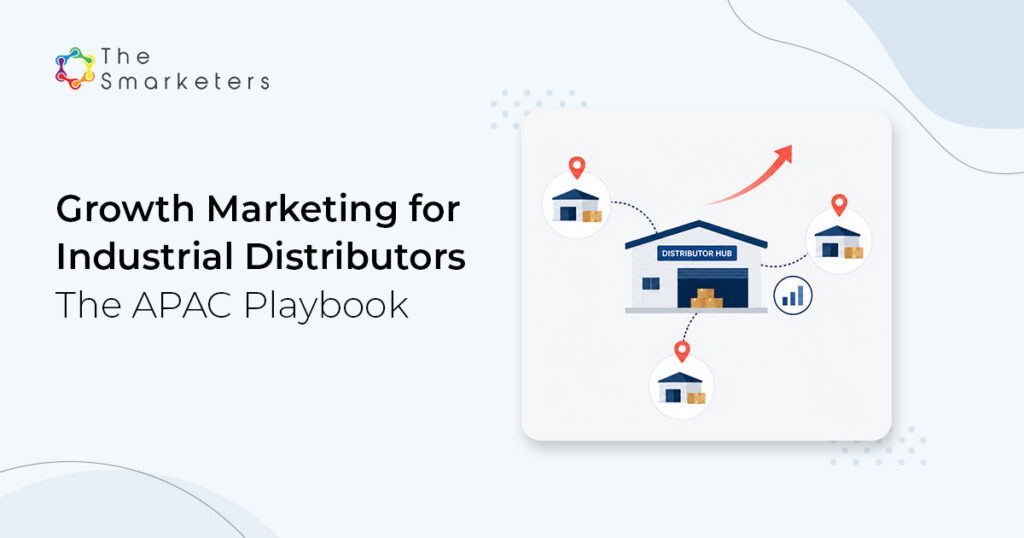
Industrial distributors grow with digital marketing by making their real advantage, local stock and application knowledge, visible where buyers now look first: search engines, AI assistants, and their phones. Digitization for a distributor is not a website refresh. It is converting the catalog, the counter conversation, and the rep’s product knowledge into structured, findable digital assets.
We sequence that work as a five-rung ladder, and the order matters because each rung compounds the one below it:
- Digitize the catalog. Every sellable SKU gets a structured, indexable page: specifications, compatibility, certifications, stock indication, and a quote path. Portable document catalogs are where demand goes to die; a PDF cannot rank, cannot be quoted from a phone, and cannot be read cleanly by an AI assistant.
- Capture demand with SEO and AEO. Part-number, brand-plus-category, and application queries are the distributor’s natural search territory. Covered in depth in the next section.
- Convert with self-service. Request-a-quote flows, stock and lead-time visibility, and mobile-first paths. Buyers who prefer rep-free research will not fill a “contact us” form with no context.
- Enable the field sales team. Route digital signals (pages viewed, quotes requested, categories browsed) to the reps and branches that own the account. The rep stops cold-calling and starts continuing conversations the website began.
- Run it all on one system. One CRM across branches, product lines, and principals, so management sees one pipeline instead of ten spreadsheets. Covered in the HubSpot section below.

Speed and mobile experience deserve special attention in this category, because plant and site buyers search from phones on factory floors and job sites. The benchmarks are unforgiving: 47% of users expect pages to load in 2 seconds or less, and a 1-second delay in load time can cut conversions by roughly 7%. Mobile already starts at a disadvantage: desktop converts around 4.8% versus 2.9% on mobile, so a slow catalog on mobile compounds two penalties at once.

E-commerce SEO and AEO for Industrial Parts
Search strategy for a distributor is bottom-up: it starts at the part number, not the brand story. The queries that carry buying intent look like “VFD 15kW 415V price,” “FR-E800 equivalent,” or “food-grade gearbox supplier near me,” and each maps to a page type you can build systematically.
| Query type | Example intent | Page that wins it |
|---|---|---|
| Part number / model | Engineer knows exactly what they need, wants stock and price | SKU page with specs, stock indication, quote CTA |
| Brand + category | Comparing suppliers for a known brand line | Brand line page: range carried, authorization status, support |
| Application / problem | "Conveyor belt slipping fix", "pump cavitation causes" | Application guide that names products at the end, not the start |
| Comparison / equivalent | Cross-referencing a discontinued or rival part | Cross-reference and equivalents tables, kept current |
| Supplier / service | "authorized [brand] distributor", "same-day bearing supplier" | Location and service pages with real proof, hours, and inventory depth |
AEO, answer engine optimization, extends the same work to AI assistants. When an engineer asks an assistant “what is the equivalent of this discontinued drive and who stocks it?”, the sources that get cited are structured, answer-first pages with tables, specifications, and named expertise. Two implications for distributors: format every guide so the direct answer comes first and the page can be quoted in fragments, and do not ignore community platforms, since Reddit is now the most-cited source across ChatGPT, Google AI Mode, Gemini, Perplexity, and AI Overviews. Genuine practitioner answers in maintenance and engineering communities are a citation asset most distributors have never considered.
What answer-first looks like in practice: an application guide titled “Why is my conveyor belt slipping?” should open with the four causes and their fixes in the first hundred words, follow with a diagnostic table an engineer can act on, and only then mention the tensioners and lagging products you stock, with links into the catalog. Structure each section so it can be lifted and quoted on its own, add named authorship from your technical team, and keep a visible last-updated date. That single template, repeated across your fifty most common application problems, typically becomes the largest organic demand source a distributor owns within a year.
Set expectations with benchmarks, not hope: the median B2B conversion rate is 2.9%, while well-executed manufacturing and industrial sites convert at 3-5%. On a catalog with tens of thousands of monthly part-level searches, the difference between 1.8% (the average B2B site) and 4% is a second sales team you did not have to hire.
Learn How Our AI SEO & AEO Agent Boosts Organic Growth.
Enabling Distributor Sales Teams with Content
Distributor reps lose deals for a predictable reason: they show up with a price list when the buyer needs a reason to switch suppliers. Content enablement fixes the middle of the funnel, where buyers consume 8-13 pieces of content before engaging sales and where up to 90% of identifiable account visitors stay anonymous unless something makes engaging worthwhile.
The enablement kit that works for distribution sales teams is short and concrete:
- Switch-cost one-pagers: what changing suppliers actually involves (credit setup, first-order process, returns), answered honestly. The unknowns, not the price, keep accounts with incumbents.
- Application proof: two-page write-ups of real problems solved, in the customer’s industry vocabulary. These outperform brand brochures in every program we have run.
- Line-card content per principal: co-branded material for each manufacturer you represent, so reps stop improvising positioning the principal already wrote.
- Signal-driven call lists: the CRM tells the rep which accounts viewed which categories this week. That list replaces the alphabetical call-down.
Smarketers insight: The highest-adoption enablement asset in channel programs is not a deck. It is a weekly, automatically generated list of “accounts showing buying signals” in the rep’s own territory. Reps use what saves them time; everything else decays in a shared drive.
Give reps a personal distribution channel as well. Procurement engineers and plant managers are on LinkedIn even when they are not posting, and 80% of B2B social media leads come from LinkedIn. A distributor sales team that shares one application write-up a week under their own names builds more account access in a quarter than the company page builds in a year, because buyers connect with people who solve their category of problem. This costs nothing except the content you were already producing for the website.
HubSpot for Distributor Management
A distributor’s operating problem is fragmentation: branches, principals, product lines, and reps each keeping their own version of the truth. A shared CRM is the fix, and HubSpot is the platform we implement most often for mid-market distributors because it combines CRM, marketing automation, and service tooling in one system that field teams will actually use. The market context: HubSpot holds roughly 38% of the marketing automation market, ended 2025 with about 288,700 customers and $3.13B revenue, and is the fastest-growing major CRM by customer count, dominant in the SMB and mid-market segment most distributors occupy where Salesforce leads enterprise share. CRM adoption overall keeps growing about 12.6% year over year, which in a channel business means your principals and your competitors are instrumenting the same accounts you serve.
The distributor-specific HubSpot build we recommend:
- Account and branch structure: companies mapped to branches and territories, with parent-child structures for multi-site customers, so a plant-level quote is visible on the corporate account.
- Pipeline per motion: separate pipelines for counter/reorder business, project quotes, and new-account acquisition. One blended pipeline hides where growth actually comes from.
- Quote-to-follow-up automation: every quote gets a sequenced follow-up; unworked quotes surface to branch managers. In most distributor audits we run, quote follow-up is the single largest untouched revenue lever.
- Principal reporting: dashboards per manufacturer line, because your best principals reward distributors who can show funnel data with better terms, leads, and co-op budget.
If you are evaluating this build, our HubSpot services team implements and runs these systems as a HubSpot Platinum Solutions Partner.
Case Study Breakdown: Industrial and Channel Programs
Two engagements from our industrial portfolio show the two halves of this playbook working: demand creation into manufacturing accounts, and partner-channel outreach of the kind distributor ecosystems run every quarter.
Demand program: Fortune 500 industrial automation
Before: high event and lead-gen spend, weak pipeline trust from sales. Bridge: an account-based program built with sales, with role-specific content for operations, engineering, and finance, measured on opportunities rather than lead volume. After: 300+ sales opportunities created in 4 weeks, with cost per lead cut 90%. (Smarketers client engagement; details at thesmarketers.com/success-stories)
Channel program: SAP partner (Globpar)
Before: a partner business relying on cold lists to reach named enterprise accounts, with the flat response rates cold lists produce. Bridge: tightly personalized, account-researched outreach sequences to the actual buying group, backed by content each role could forward internally. After: 70% target-account engagement, 63% email open rates, and a 41% meeting acceptance rate. (Smarketers client engagement; details at thesmarketers.com/success-stories)

The read-across for distributors: the first case is that your principals increasingly expect their channel to run with them; the second is the outreach standard for opening named accounts. Both were measured on opportunities and meetings, not lead counts, and both worked because the content was built for specific roles at specific companies.
When This Playbook Should Wait
Digitization programs fail in predictable situations. Hold off, or narrow the scope, if any of these apply:
- Your product data is not ready. If specifications live in principals’ PDFs and reps’ heads, building the website first produces an empty shell. Product information management comes before marketing; budget for the unglamorous data work.
- Margins cannot fund the transition. Catalog digitization plus CRM plus content is a multi-quarter investment. A distributor in a margin squeeze should start with the single highest-return rung (usually quote follow-up automation) rather than the full ladder.
- Principal conflict is unresolved. If your key manufacturers sell directly online in your territory, agree to the digital rules of engagement first. Building search visibility that your principal then undercuts is wasted spend and a damaged relationship.
- Leadership wants a campaign, not an operating change. This playbook changes how reps work and how branches report. Without management follow-through, the CRM becomes an expensive address book, and the ladder stops at rung one.
Where to Start
Start with a two-week diagnostic you can run internally: pick your 50 highest-value SKUs and search for them the way a buyer would, by part number and by application, on Google and on an AI assistant. Log who shows up. If it is marketplaces and competitors, you have your business case, and the ladder above is your sequence.
To see what these programs look like when they are run properly, with the numbers, view our industrial case studies.
Frequently Asked Questions
How long does it take an industrial distributor to see results from digital marketing?
Quote-follow-up automation and sales-signal routing show results in the first quarter. Part-number and application SEO typically takes two to four quarters to compound, because it depends on catalog pages being indexed and earning authority. Plan the program in rungs with a measurable win each quarter, not as a single big-bang launch.
What budget should a mid-market distributor allocate to this?
Anchor it to the cost of the alternative: hiring salespeople. A catalog-plus-CRM-plus-content program typically costs less annually than two field reps, and unlike headcount it compounds. Start with the data and CRM foundation, then fund content and search from the first efficiency gains, usually recovered quote revenue.
Do we need e-commerce checkout, or is request-a-quote enough?
For most industrial distributors, structured request-a-quote with stock visibility captures the majority of the value, because pricing is account-specific and orders are negotiated. Add transactional checkout for standardized, repeat-purchase categories once quote flows are working. Checkout-first projects frequently stall on pricing complexity.
How do we do this without antagonizing our manufacturer principals?
Involve them early and share the data. Most principals actively want digitally capable channel partners and will contribute product data, co-op budget, and leads to distributors who can show funnel metrics. The conflict cases are usually territories where rules of engagement were never agreed; settle those before building.
Which matters more for us: SEO or AEO?
They are the same foundational work with different retrieval systems on top. Structured SKU pages, answer-first application guides, and cross-reference tables serve both Google and AI assistants. If your buyers skew younger or research-heavy, AEO visibility is rising fastest; 94% of B2B buyers already use generative AI somewhere in the purchase process.
Our sales team is skeptical of CRM. How do we get adoption?
Give reps something before asking for something: launch with the weekly buying-signal list and mobile quote visibility, which save time immediately, and only then enforce logging discipline. Adoption fails when the CRM is introduced as a reporting obligation instead of a selling advantage.
Does this playbook apply to distributors outside APAC?
The ladder itself is universal; the APAC specifics are the mobile-first buyer behavior, multi-market catalog complexity (languages, standards, voltages), and the pace at which regional principals are digitizing their channels. Distributors elsewhere can run the same sequence with different weighting on those factors.
What is the single fastest win while the bigger program builds?
Quote follow-up. Audit every quote issued in the last 90 days and check which received a structured follow-up; in most distributor audits we run, the majority received none. Automating that one workflow routinely pays for the rest of the program.

Swati Bansal
Sr. Content Strategist