
Table of Contents
- Why do hyperscaler sellers give partners only 90 seconds?
- What should a co-sell one-pager include?
- Why does workload-specific proof beat a company overview in co-sell?
- How are hyperscaler sellers paid on partner deals?
- How should solution briefs map to AWS, Microsoft and Google Cloud partner programs?
- What co-sell enablement cadence survives seller turnover?
- How do you track which hyperscaler sellers bring you in?
- What co-sell content should you stop sending to partner sellers?
- When does co-sell enablement not work?
- Frequently Asked Questions
Need help with B2B Marketing?
Let the smarketers’ team drive your pipeline with data-led campaigns and AI-powered growth strategies.
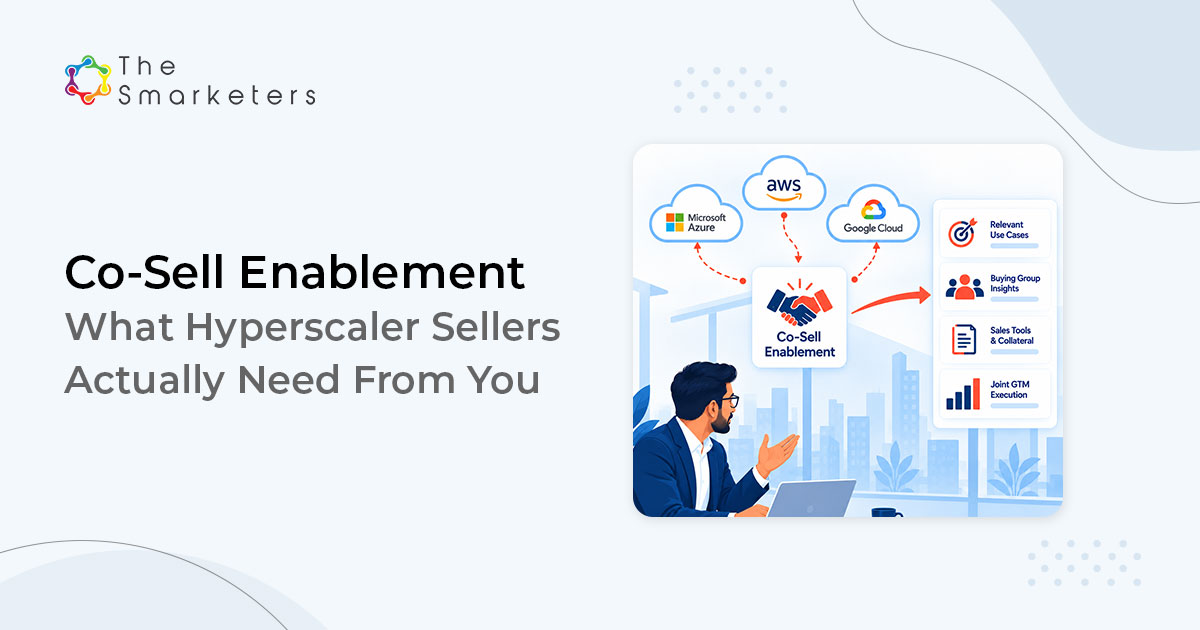
A hyperscaler seller carrying a consumption target has perhaps 90 seconds for you and forty other partners competing for the same slot in their head. They introduce the partners who make their own quota easier to hit. Effective co-sell enablement should therefore lead with the workload, the customer outcome and the effect on platform consumption, not with your company overview, your founding year or your values.
Almost every partner marketing team running hyperscaler co-sell knows this and almost none of them act on it, because the deck already exists and rewriting it feels like a step backwards.
Co-sell enablement is the set of assets and routines a partner gives a hyperscaler’s field sellers so they can spot a customer need, describe the partner in one sentence, and register a joint opportunity without preparation. On AWS, Microsoft and Google Cloud, that means workload one-pagers, discovery questions, a short recurring briefing and clean deal registration.
Why do hyperscaler sellers give partners only 90 seconds?
Because their day is a queue. A cloud account executive covers a set of named accounts, carries a growth number, and is chased by specialists, their partner development manager and every partner in the territory.
They are not evaluating you as a supplier. They are scanning for a sentence they can repeat to a customer without checking anything. If your material does not produce that sentence in a minute, it will not be used.
KEY TAKEAWAY
The unit of co-sell enablement is not a document. It is a repeatable sentence a seller can say in a customer meeting without preparation
What should a co-sell one-pager include?
A co-sell one-pager is one page, and every element earns its space. The test is whether a seller who has never met you could brief a customer from it while walking between meetings.
| Element | What it must say | Common failure |
|---|---|---|
| Workload | The named technical motion, not a category | "Digital solutions" |
| Customer profile | Industry, size band, and the trigger event | "Enterprises of all sizes" |
| Outcome | A number with a timeframe | "Improved efficiency" |
| Consumption effect | What it means for platform usage | Omitted entirely |
| Delivery shape | Duration, team size, phases | A 12-step methodology diagram |
| Proof of capability | Certifications, competencies, designations | A logo wall |
| Next action | A named person and what happens in week one | "Contact us" |
The consumption row is the one partners leave out and the one sellers read first. If your engagement moves a customer onto more managed services, more data volume or a longer commitment, say so plainly.
Why does workload-specific proof beat a company overview in co-sell?
Because sellers think in workloads. Their account plans, specialist colleagues and internal reporting are organized by motion: migration, data platform, analytics, security posture, contact center, application modernization.
A general capability deck forces the seller to translate what you do into what their customer needs, and nobody does that for a partner they have not worked with. In our experience, ten narrow one-pagers, each tied to a single workload, outperform one polished overview, because each maps onto a conversation the seller is already having.
STAT
68% of B2B buyers already have a front-runner vendor in mind when the buying process begins, and that front-runner wins 80% of the time. Source: Forrester Buyers’ Journey Survey, 2025.
A seller introduction is one of the few mechanisms that puts you in the front-runner position before a formal evaluation exists. That is what the co-sell motion is worth, and why the content deserves better than an afternoon. According to a Canalys study cited by AWS, 65% of partners close deals faster when co-selling with AWS, and 54% win larger deals.
How are hyperscaler sellers paid on partner deals?
Compensation structures differ by vendor and are revised most years, so verify specifics with your partner development manager rather than trusting anything published. The general pattern in cloud is consistent enough to plan around.
Field sellers are measured largely on revenue or consumption growth in their accounts. Specialists carry targets for particular services or motions. Partner-facing roles are measured on partner-sourced or partner-influenced pipeline. Several programs attach credit or an accelerator when an opportunity is registered and closed with a partner.
Two consequences. Deal registration (ACE on AWS, Partner Center on Microsoft, Partner Advantage on Google Cloud) matters as much as the introduction, because an unregistered deal is invisible in the systems that pay people. And anything you can say about how quickly a workload starts consuming is directly relevant to the person you are asking for help.
How should solution briefs map to AWS, Microsoft and Google Cloud partner programs?
Map each brief to the badge or program the vendor already recognizes, then use the vendor’s own words for it. Sellers filter partners by these designations, and internal partner search tools are built on them.
Name your competencies, service delivery designations, specializations or expertise areas exactly as the program names them, and pair each brief with the migration, modernization or industry construct it belongs to. Program names and criteria change regularly, so put a review date on every brief. On AWS co-sell, these briefs should also feed your Field Readiness Kit (FRK), the internal document AWS sellers use to understand and position your solution.
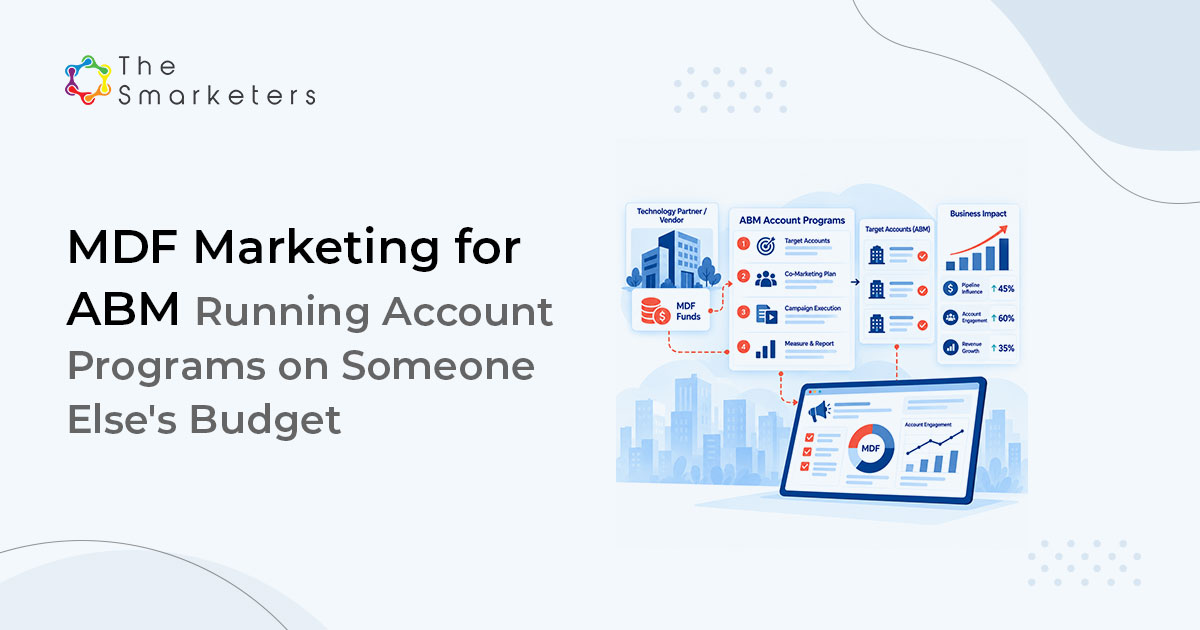
Where a workload sits inside a funded vendor construct, such as MDF-backed programs or migration funding, say so in the first two lines. A seller with a funded route to a customer problem behaves very differently from one who has to invent the path.
Here is where co-sell content lives on each hyperscaler.
| Hyperscaler | Co-sell system | Where your content surfaces |
|---|---|---|
| AWS | ACE in AWS Partner Central | Field Readiness Kit and ACE opportunity fields |
| Microsoft | Partner Center | Co-sell solution listing summary and attached collateral |
| Google Cloud | Partner Advantage | Partner profile and opportunity registration |
PROOF POINT
LeidIT, a ServiceNow ecosystem partner (a non-hyperscaler alliance), is one of the alliance programs The Smarketers has run within a portfolio of 250+ clients and more than $450M in generated pipeline since 2015. Partner-sourced opportunities after the co-sell content rebuild: [FIELD: number of partner-registered opportunities in the two quarters following the rebuild].
What co-sell enablement cadence survives seller turnover?
Assume the seller you briefed last quarter has moved. Cloud field teams reorganize frequently, and a co-sell program built on individual relationships decays the moment territories change.
Build for replacement rather than relationship.
| Asset or ritual | Cadence | Why it survives a reorganization |
|---|---|---|
| Practice briefing, thirty minutes | Recurring, same slot | New sellers can join without an invitation |
| One-pager per workload | Always current, stable link | The link keeps working when people move |
| Shared channel with the partner team | Continuous | Questions do not sit in one inbox |
| Territory review with the partner manager | Quarterly | Surfaces registered opportunities by seller |
| Three-question discovery card | Always current | Lets a new seller spot the need alone |
The last row is the highest-return asset here and the one almost nobody builds. Sellers cannot introduce you until they have spotted the need, and the discovery questions are more useful than your credentials.
We rebuilt this for a partner working across two ecosystems. The old program was a quarterly deck sent to a distribution list. We replaced it with three workload one-pagers, a discovery question card and a standing thirty-minute briefing. Within two quarters the introductions were coming from sellers nobody on the partner team had met.
How do you track which hyperscaler sellers bring you in?
Instrument it at the level of the individual, because partner-sourced pipeline reported as a single number tells you nothing about where to spend time.
Capture three fields on every partner-influenced opportunity in your CRM: the vendor, the named seller or team who introduced it, and the registration reference. Then run a quarterly view of opportunities by introducing seller. In most programs a handful of sellers produce most introductions, and that list is your enablement priority.
Buyers use an average of seven information sources, according to Gartner in May 2026. A seller introduction is one of the few that arrives with borrowed trust attached, which is why it deserves this level of tracking.
What co-sell content should you stop sending to partner sellers?
| Stop sending | Send instead |
|---|---|
| The corporate overview deck | One page per workload |
| Case studies with the name and numbers removed | A story with both, cleared for use |
| Company newsletters to partner lists | A short recurring briefing |
| Webinar invitations with no workload in the title | An invitation naming the motion |
| Anything requiring a login | A public link a seller can forward |
| A 14-page PDF | The one page the seller needed |
When does co-sell enablement not work?
Co-sell content cannot manufacture a relationship that the delivery record does not support. If the last two joint engagements went badly, the sellers know, and better collateral will not change the outcome.
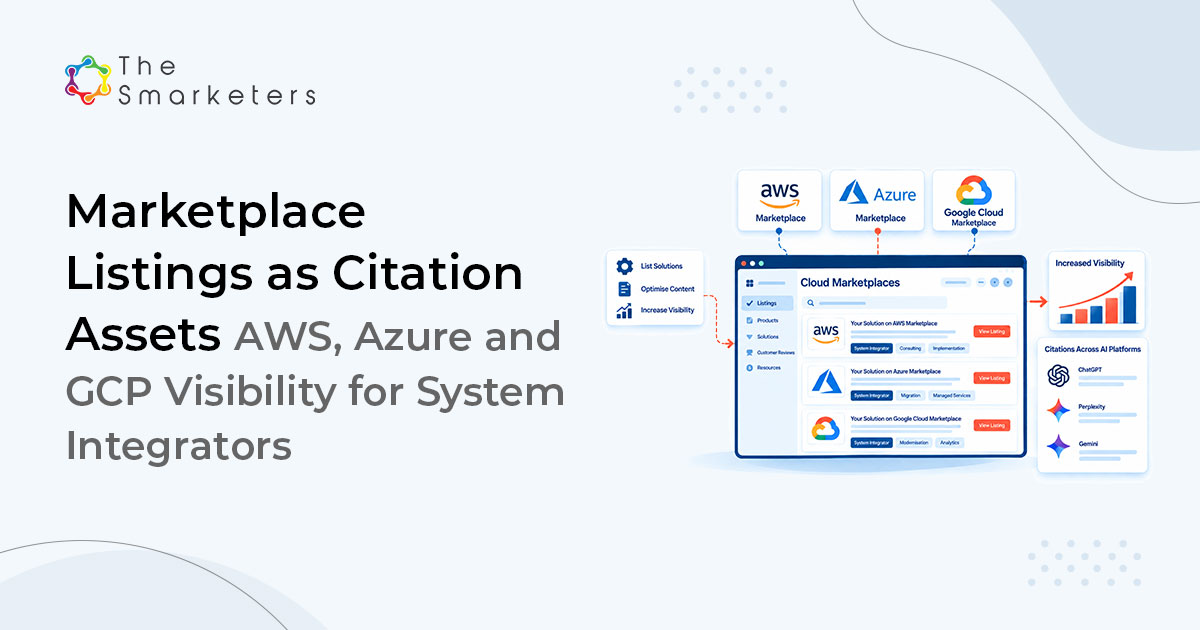
It also assumes there is a seller to enable. In segments the vendor covers through digital channels or through distribution rather than a named field team, there is no 90-second window to win, and the effort belongs in cloud marketplace listing optimization instead.
Finally, this motion has a floor on effort. A partner with one certification and no completed customer stories has nothing to put in the proof row, and no amount of sales enablement design fixes that. Build the practice evidence first, then the cloud partner marketing program around it, using real customer stories as the raw material.
Frequently Asked Questions
What is co-sell enablement?
Co-sell enablement is the set of assets and routines a partner gives a hyperscaler’s field sellers so they can spot a customer need, describe the partner in one sentence, and register a joint opportunity. Core assets are one page per workload, a three-question discovery card, a short recurring briefing and clean deal registration.
What is an AWS Field Readiness Kit?
A Field Readiness Kit (FRK) is an internal AWS document that helps AWS sellers understand a partner’s solution, positioning and target personas so they can co-sell it. Build it from the same workload one-pagers and discovery questions you give sellers directly, and update it when your program designations change.
How do I enable hyperscaler partner sellers effectively?
Give them one page per workload containing the technical motion, the customer profile and trigger, an outcome with a number and timeframe, the effect on platform consumption, and a named contact. Add a card of three discovery questions so they can spot the need themselves. Keep the links stable as territories change.
What should co-sell content include?
The named workload rather than a category, the customer profile and trigger event, a quantified outcome with a timeframe, the consumption implication, the delivery shape, your relevant competencies or designations in the vendor’s own wording, and one clear next action with a named person.
Why do partner sellers ignore corporate overview decks?
Because they need a sentence they can repeat to a customer without preparation, and an overview deck does not produce one. It forces the seller to translate your capabilities into their customer’s problem, which nobody does for a partner they have not worked with before.
How does deal registration affect co-sell?
Registration is what makes an opportunity visible in the systems that measure and pay people on both sides. An unregistered introduction may still close, but it generates no partner-sourced credit, so the relationship produces nothing measurable. Register early and keep the reference on your own opportunity record.
How often should partner sellers be briefed?
Run a short recurring briefing on a fixed slot rather than occasional set-piece sessions, and keep every asset at a permanent link. Cloud field teams reorganize frequently, so design the program so a seller who joins the territory next month can self-serve without meeting anyone.
How do I measure co-sell performance?
Track opportunities by introducing seller, not just total partner-sourced pipeline. Capture the vendor, the named seller and the registration reference on every opportunity, then review quarterly. A small number of sellers usually generate most introductions, and that list sets your enablement priorities.

Indrani Gope
Content Head